
Last updated October 15, 2026
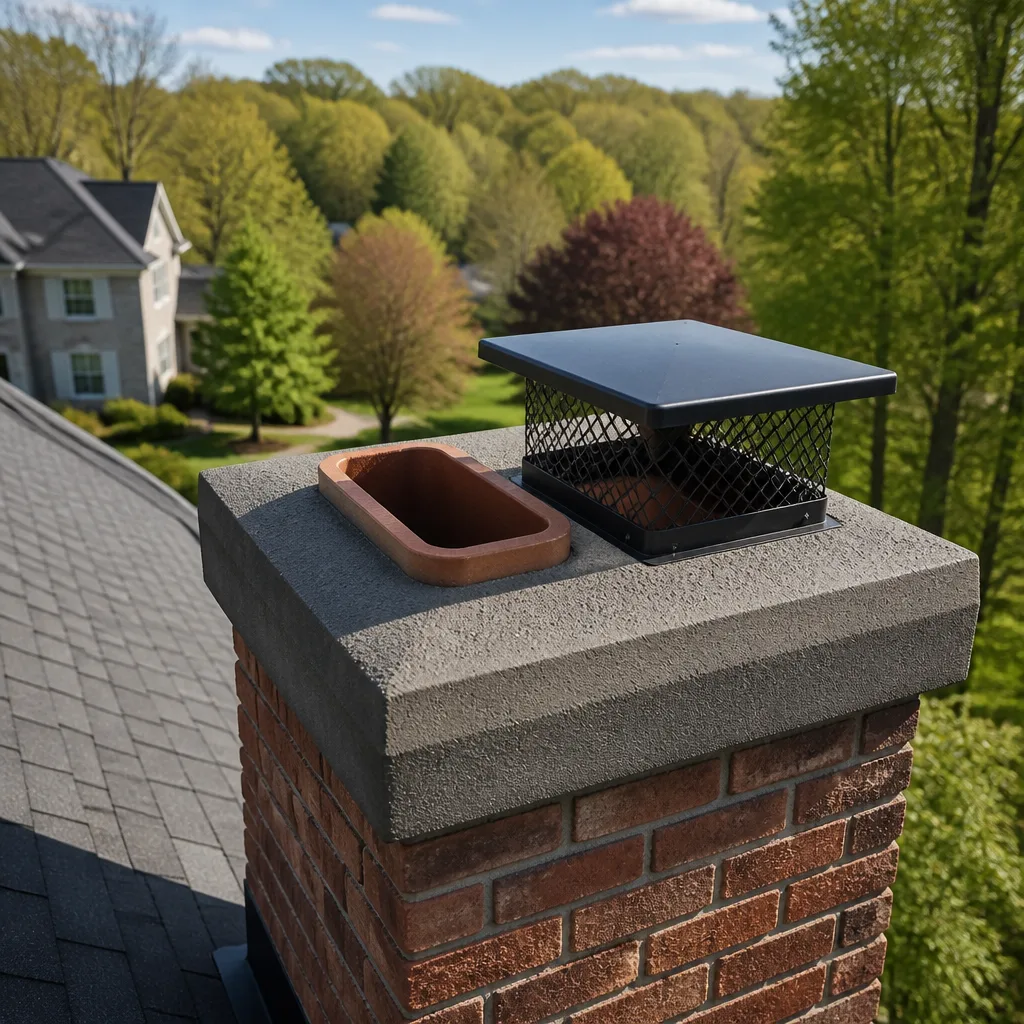 Sweep & inspection
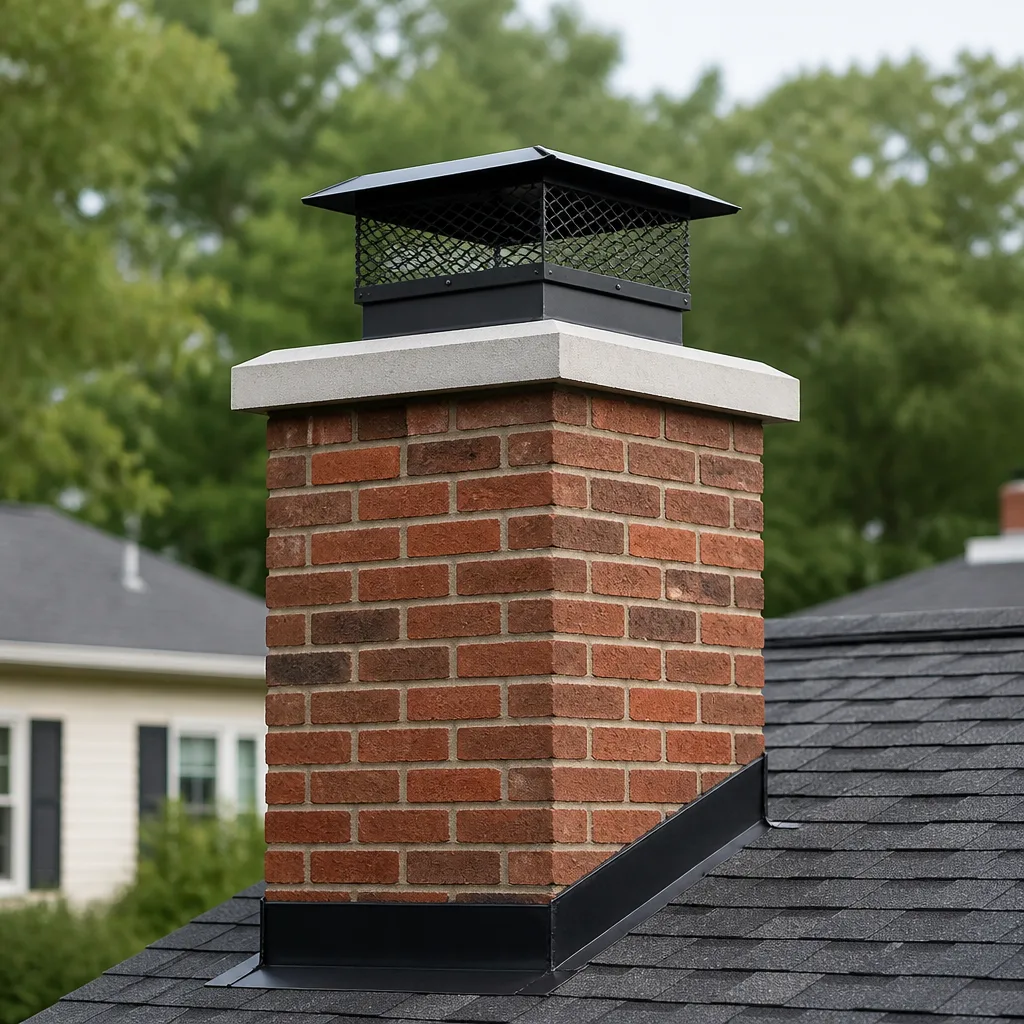 Caps & crowns
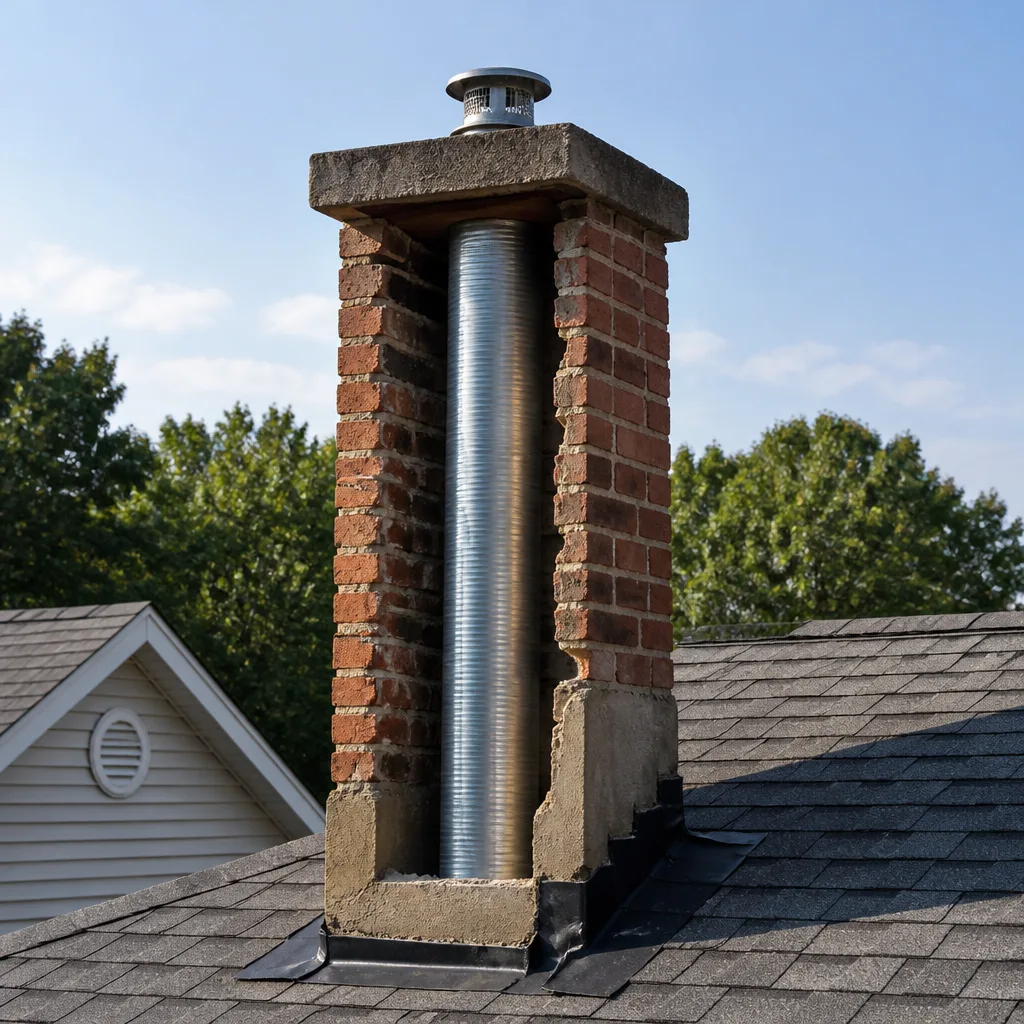 Flue relining
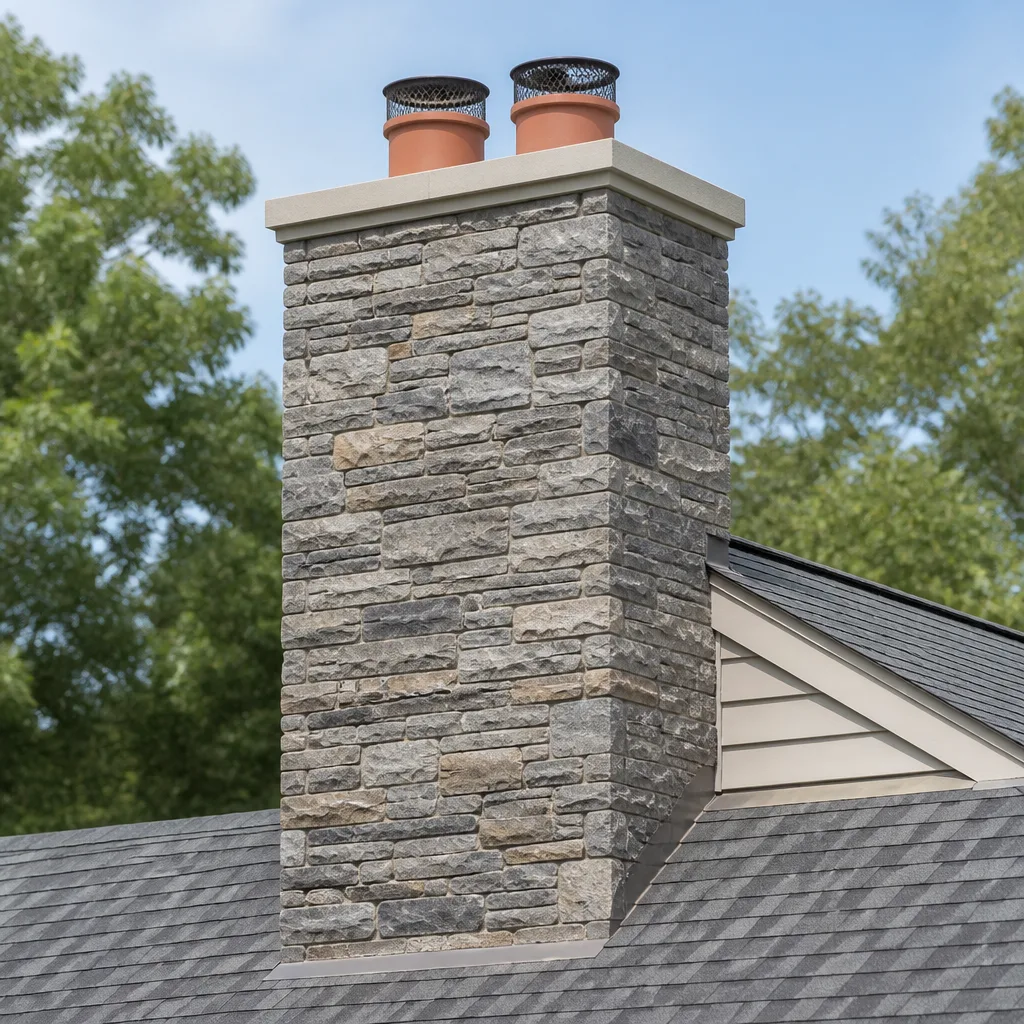 Masonry repair
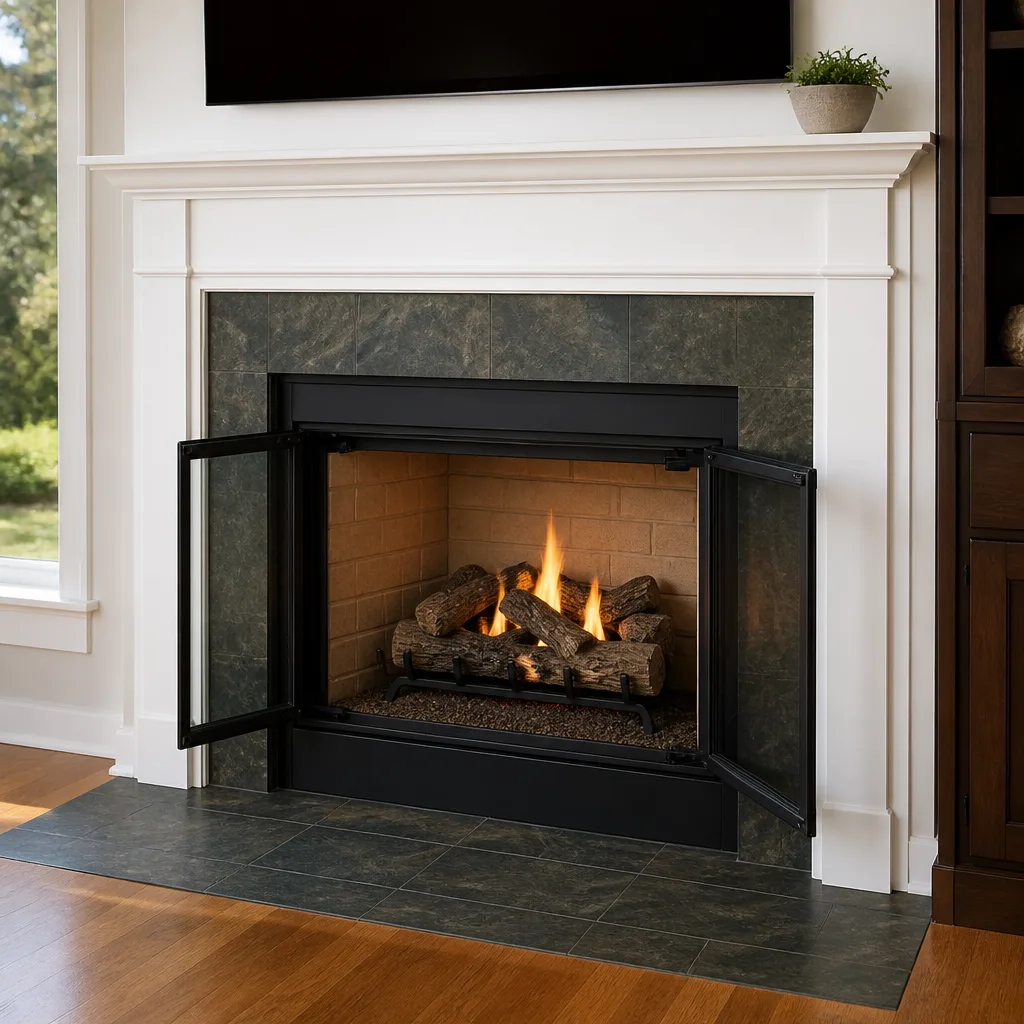 Gas fireplace service
Level 1 sweep and inspection to the NFPA 211 annual standard - flue, crown, cap, and flashing checked and photographed
Chimney sweep logs do not sweep chimneys. They loosen some creosote - which then falls where a brush and vacuum still have to collect it.
The Complete Guide to Chimney Cleaning in San Antonio
A chimney used only ten to fifteen times a year isn’t a safe chimney. It’s a chimney that skipped a full year of inspections while birds, moisture, and glazed creosote quietly did their work. San Antonio homeowners face a specific problem that most national guides never address: our short, irregular burn season creates a creosote pattern that looks nothing like what a Minneapolis chimney produces after nightly winter fires. This guide explains exactly what that means for your fireplace, what a proper cleaning in San Antonio should include, what it should cost, and how to know when a technician is telling you the truth about work you actually need rather than work they want to sell. For more guides & resources, see our blog.
Quick Answer
Chimney cleaning in San Antonio typically costs between $189 and $350 for a standard sweep of a regularly used fireplace, with most homeowners paying around $220 to $280. A proper cleaning includes a full flue brushing, smoke chamber cleaning, damper inspection, and a basic safety check of the cap and crown. Because San Antonio’s burn season is short and irregular, annual cleaning is still recommended even for low-use fireplaces, since creosote from mesquite and live oak burns differently than seasoned hardwood and can create stubborn deposits that build up over multiple seasons.
Styles & brands we work with
Table of Contents
- The Low-Use Problem: Why San Antonio Fireplaces Get Dirtier Than You’d Expect
- What a Professional Chimney Cleaning in San Antonio Actually Includes
- Level 1 vs. Level 2: What a Low-Frequency User Really Needs
- Live Oak, Mesquite, and Creosote: What San Antonio Firewood Does to Your Flue
- Limestone Soil, Humidity Swings, and Your Mortar Joints
- How Much Does Chimney Cleaning Cost in San Antonio?
- What a Written Care Promise Should Include Before Work Begins
- The Exact Sequence of a Professional Cleaning Visit
The Low-Use Problem: Why San Antonio Fireplaces Get Dirtier Than You’d Expect
Here’s the counterintuitive reality we see across Bexar County every winter. A fireplace that burns twelve fires between October and March doesn’t develop a thick blanket of fluffy creosote. Instead, it develops a thin, hard glaze that bakes onto the flue walls each time the fire cools. That glaze doesn’t brush off easily, and it doesn’t go away on its own. The next season, another thin layer goes down on top of it. After three or four years of “light use,” you’re looking at a hard, tar-like coating that a basic brush can’t remove.
National guides written for cold-climate homes assume heavy creosote buildup from daily burning. They miss what makes San Antonio different: our fires are occasional, which means the flue never gets hot enough, consistently enough, to burn off early-stage creosote. Each fire deposits a small amount of residue. Each month of South Texas humidity lets that residue absorb moisture and harden. By the time a homeowner calls us, the issue isn’t how much creosote is in the chimney, it’s how stubborn the creosote has become.
Add to that the simple fact that a chimney that sits unused from March to October is a chimney that wildlife, wind-blown debris, and rain all move into. Birds nest in uncapped flues. Leaves from San Antonio’s enormous live oaks find their way onto the crown and into the smoke chamber. Moisture from our spring and fall rain events works into tiny cracks in the masonry. A chimney that isn’t cleaned because it “wasn’t used much” is often a chimney that needs more work, not less, once someone finally looks inside it.
So the short answer to “How often should I clean my fireplace in San Antonio?” is: every year, regardless of how many fires you burned. The reason isn’t fuel buildup from heavy use. The reason is what a full year of South Texas climate does to a structure you can’t see inside.
What a Professional Chimney Cleaning in San Antonio Actually Includes
A legitimate chimney cleaning is not a guy with a shop vac and a round brush. It’s a methodical process that moves from the top of the chimney down through the firebox, and every step has a purpose. Here’s what a proper sweep covers, in the order a trained technician works through it.
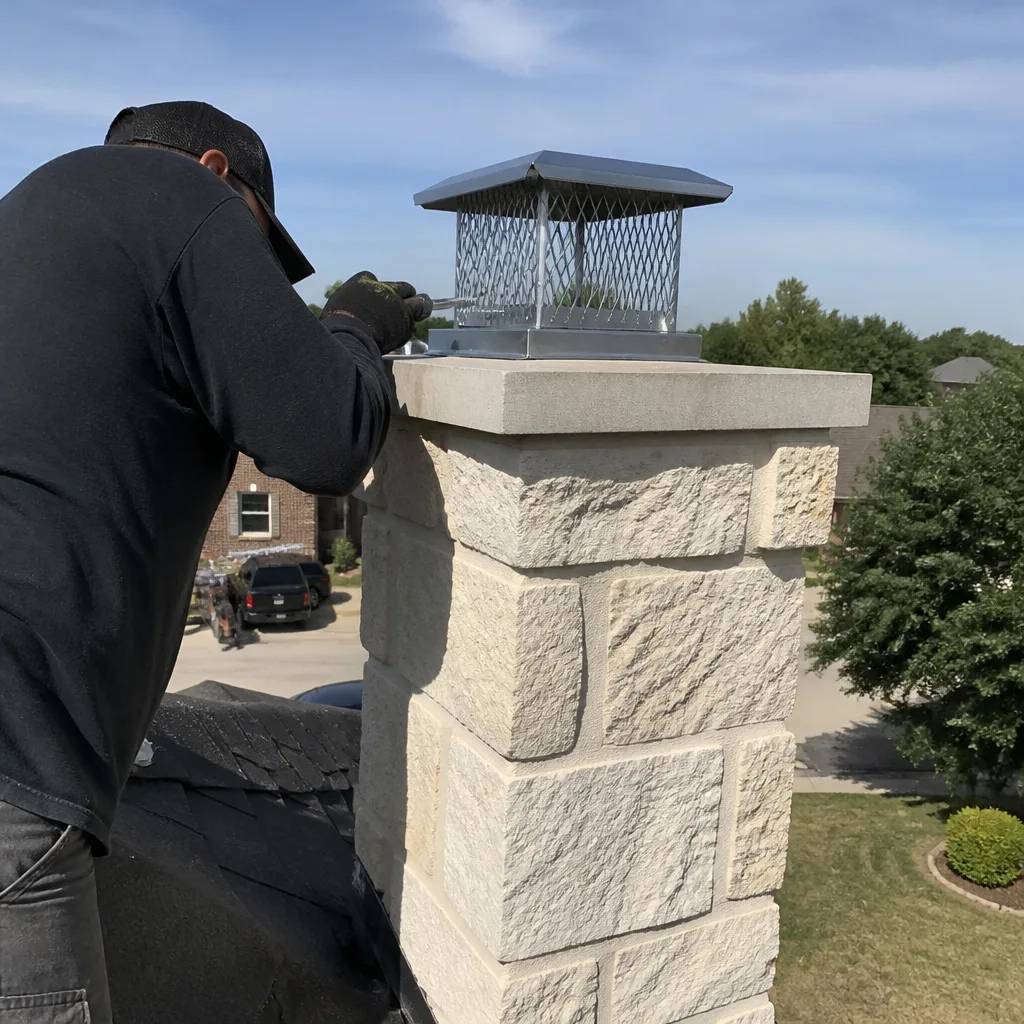
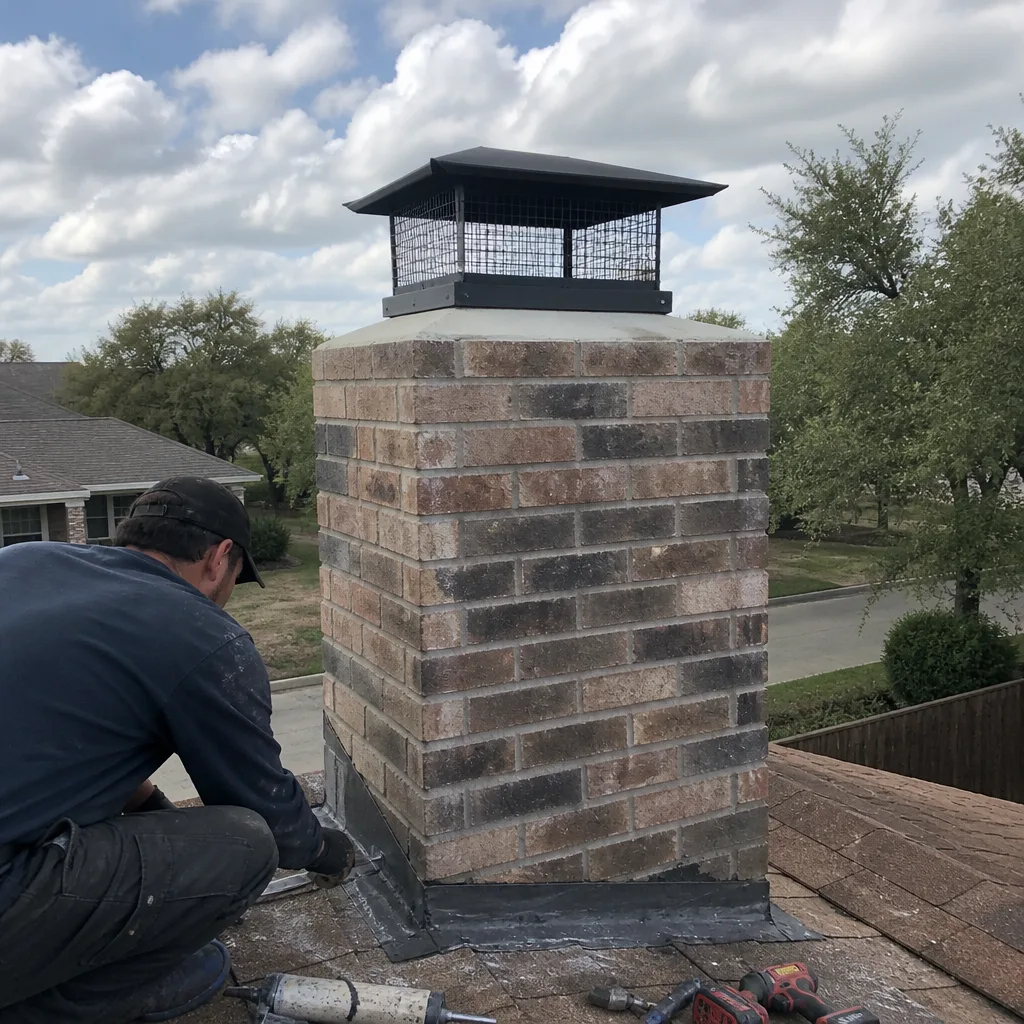
- Cap and crown inspection. The technician checks the chimney cap for damage, rust, or missing screens, and examines the crown (the concrete or cement surface at the top) for cracks that let water in.
- Flue brushing. A correctly sized wire or poly brush is run the full length of the flue to dislodge creosote and soot from the liner walls. This is the heart of the cleaning.
- Smoke chamber cleaning. The angled area above the damper where smoke gathers before entering the flue gets brushed by hand. This area is missed by a shocking number of low-cost sweeps.
- Damper inspection and lubrication. The technician confirms the damper opens and closes fully, and that the seal is intact.
- Firebox cleanup. Ash and debris are removed from the firebox floor. The technician should also visually check firebrick for cracking or spalling.
- Smoke shelf and throat cleaning. The flat shelf behind the damper collects debris that falls from the flue. It should be swept clean.
- Basic safety check. The technician verifies that the flue is properly sized for the fireplace opening, that no combustible materials sit too close to the firebox, and that the chimney has adequate draft.
At Kindling Chimney San Antonio, every one of these steps happens on every cleaning visit, no exceptions. We also put shoe covers and drop cloths down before we start, and we take a photo of the cleanup when we’re done. You see what we saw.
For a deeper look at what a full sweep includes, see our Chimney Sweep in San Antonio page.
Level 1 vs. Level 2: What a Low-Frequency User Really Needs
Chimney inspections come in three levels defined by the National Fire Protection Association, and understanding the difference between Level 1 and Level 2 will save you from paying for more than you need, or skipping something you actually require. If you’re weighing whether to tackle maintenance yourself or call a pro, our DIY vs Professional Chimney Cleaning: The San Antonio Homeowner’s Decision Guide can help.
A Level 1 inspection is what should happen during every routine cleaning. The technician examines the readily accessible portions of the chimney, flue, and appliance using a flashlight and basic hand tools. No ladders to the roofline, no cameras, no demolition. This is sufficient when your chimney is in the same condition and same usage pattern as it was during the previous year’s inspection.
A Level 2 inspection goes further. It includes everything in a Level 1, plus visual inspection of the attic, crawlspace, and exterior surfaces, and typically a video camera scan of the flue interior. The NFPA requires a Level 2 inspection in specific situations:
- When you buy or sell a home
- After a chimney fire, lightning strike, or seismic event
- When you change the appliance (installing a new insert, changing fuel type)
- When the exterior of the chimney has been rebuilt or significantly repaired
For most San Antonio homeowners who use their fireplace occasionally and haven’t changed anything since the last cleaning, a Level 1 inspection during the annual sweep is appropriate. But if you bought your home in the last year and no one has looked at the chimney since the sale, a Level 2 with a camera scan is the honest starting point. It shows you the actual condition of the liner, which matters more in San Antonio than in drier climates because our humidity works on flue tiles year-round.
If you’re unsure which level your chimney needs, our Chimney Inspection in San Antonio page walks through the process in detail.
Live Oak, Mesquite, and Creosote: What San Antonio Firewood Does to Your Flue
What you burn in San Antonio changes what ends up on your flue walls. Most local firewood comes from two sources: live oak and mesquite. Both burn hot. Both are dense. Neither behaves like the seasoned ash or birch that national chimney guides assume you’re using.
Live oak is excellent firewood once it’s properly seasoned, but it takes two full years to dry out properly. A lot of what gets sold as “seasoned oak” in San Antonio has only been split for six to eight months, which means it still carries 30 to 40 percent moisture. Burning that produces heavy, cool smoke that condenses quickly on flue walls. That’s early-stage creosote forming, and it’s the hardest kind to remove once it bakes on.
Mesquite burns extremely hot and produces intense heat with very little ash, but it also produces a dense, sticky smoke high in natural resins. Those resins condense inside a flue that’s still warming up during the first half hour of a fire. If you burn mesquite regularly, you’ll see a shiny, dark glaze on your flue liner within two to three seasons, even with modest use.
The practical guidance: burn only wood that’s been split and stacked for at least twelve months, regardless of species. If you’re buying “seasoned” wood and it hisses or bubbles when it burns, it’s still wet. That hissing is moisture boiling out of the wood, and that moisture is pushing creosote onto your flue walls at the exact moment your chimney is coolest.
San Antonio’s burn season is also interrupted. You might light a fire on a Friday night in November, then not again until after New Year’s. Those gap weeks are when the creosote from your last fire cools, hardens, and bonds to the liner. The next fire doesn’t burn it off, it just lays a new layer down.
Limestone Soil, Humidity Swings, and Your Mortar Joints
San Antonio sits on limestone bedrock, and that has a direct effect on chimney masonry. Limestone contains natural moisture that cycles through the soil. When combined with our October-to-March humidity swings and the occasional hard freeze, that moisture works its way into exterior mortar joints through a process called freeze-thaw cycling.
Here’s what happens. Water seeps into microscopic cracks in the mortar. On a cold night, that water freezes and expands. On a warm afternoon, it thaws and contracts. Each cycle widens the crack by a fraction of a millimeter. Over several winters, those fractions add up to gaps you can see from the ground: missing mortar, flaking brick faces, and a chalky white residue called efflorescence on the chimney exterior.
The same moisture that attacks exterior mortar also enters the flue if the crown is cracked. A cracked crown lets rainwater run down the inside of the flue, where it mixes with creosote to form a corrosive, acidic slurry that eats away at clay flue tiles. This is one of the most common hidden problems we find during Fireplace Repair in San Antonio visits, and it’s almost always the result of a crack that went untreated for one or two seasons.
The fix is usually straightforward when caught early: tuckpointing for exterior joints, a crown sealant or new crown for the top, and in more advanced cases, a stainless steel liner installed over damaged tiles. Products like HeatShield and Gelco are specifically designed for resurfacing damaged flue interiors, so a full teardown isn’t always necessary.
What matters is catching the moisture problem before it becomes a structural problem. An annual cleaning visit that includes a crown and mortar inspection gives you that chance.
How Much Does Chimney Cleaning Cost in San Antonio?
Most standard chimney sweeps in San Antonio fall between $189 and $350, with the typical fireplace costing between $220 and $280 for a full cleaning and Level 1 inspection. Here’s a breakdown of what drives the price.
- Standard open fireplace sweep: $189 to $250, including flue brushing, smoke chamber cleaning, and basic safety check.
- Sweep with camera inspection (Level 2): $325 to $450, adds a full video scan of the flue interior and a written condition report.
- Heavy creosote removal (Stage 3 glaze): $75 to $150 above the standard sweep, requires specialized chemical treatment or rotary chain sweeping.
- Chimney cap replacement: $150 to $400 installed, depending on size and material.
- Crown sealant application: $200 to $350, prevents moisture intrusion at the top of the chimney.
- Flue tile repair (HeatShield or similar): $600 to $1,200, depending on the number of damaged sections.
- Full stainless steel liner installation: $2,500 to $5,000, for chimneys with extensive tile damage or unlined masonry.
Prices in San Antonio’s market vary based on chimney height, roof accessibility, and the condition of the flue. A two-story home with a steep roof and a 30-foot chimney will cost more than a single-story ranch with easy access. Any technician who quotes a price without looking at the chimney, either in person or via photos, is guessing.
At Kindling Chimney San Antonio, you get a written price before any work starts, every time. No on-the-spot pressure, no “we found something while we were in there” surprises. If the price changes, it changes on paper before the work changes, not after.
Call (361) 491-3153 for an exact quote on your chimney.
What a Written Care Promise Should Include Before Work Begins
Before any technician steps into your home, you should have a written document in hand that answers three questions: what will this cost, what will you do, and what happens if I’m not happy with the result. If a company won’t put those answers in writing, find another company. Our How to Hire a Chimney Cleaning Contractor in San Antonio: A Step-by-Step Guide walks through exactly what to look for.
The written care promise we use at Kindling, called the Cedarwell Care Promise, covers three specific things on every visit:
- Price: The total cost of the cleaning, inspection, and any agreed-upon repairs is written down before work starts. If additional issues are found during the job, the technician stops, explains what was found with camera evidence, and provides a new written price before proceeding.
- Cleanup scope: What areas of the home will be protected during the visit, and what the cleanup includes. Our technicians put down shoe covers and drop cloths before they enter, they don’t move furniture without asking, and they take a photo of the finished cleanup before they leave.
- Craftsmanship guarantee: What happens if something goes wrong. Our 365-Day Done Right Promise states plainly: if the work isn’t done right, we make it right. No fine print, no runaround, no charge.
Here’s why this matters in San Antonio specifically. Our market has a wide range of chimney service providers, from solo operators running a truck and a brush to established companies with full inspection equipment. Price shopping is difficult because the scope of what’s included varies wildly. One company’s $150 “sweep” might mean ten minutes with a brush and a handshake. Another company’s $250 sweep includes the smoke chamber, the cap inspection, and the written report. The written care promise is how you know which one you’re actually getting.
A live person answers our phones 24 hours a day, 7 days a week. When you call (361) 491-3153, you’ll talk to a human who can walk through what a cleaning should include for your specific fireplace and schedule a time that works for your family.
The Exact Sequence of a Professional Cleaning Visit
If you’ve never watched a chimney cleaning happen, here’s what a proper visit looks like from the moment the technician arrives to the moment they leave. This is the sequence we follow on every Kindling Chimney San Antonio job.
- Arrival and floor protection. The technician introduces themselves, confirms the job scope, and lays down protective covering from the entry door to the fireplace. Shoe covers go on before entering. If you have kids or pets, we’ll ask where they are so we can work around them without disturbing them.
- Fireplace prep. A heavy-duty tarp or plastic barrier is set up around the firebox opening to contain dust. The damper is checked and closed if possible.
- Roofline work. The technician accesses the chimney from the roof or ladder, removes the cap if present, and visually inspects the crown, flue opening, and exterior masonry.
- Flue brushing. A brush sized to your flue runs from top to bottom, dislodging creosote and soot from the liner walls. For stubborn glaze, a rotary chain system or chemical treatment may be needed.
- Smoke chamber and shelf cleaning. The technician brushes the smoke chamber and smoke shelf by hand from inside the firebox, removing debris that fell from the flue.
- Firebox cleanup. Ash and debris are removed with a dedicated HEPA-filtered vacuum, not a household vacuum that blows fine particles back into the room.
- Post-clean inspection. The technician checks the damper operation, verifies the flue is clear, and documents the condition of the liner, crown, and cap. If a camera scan was requested, it happens here.
- Cleanup and photo. All equipment is removed, the work area is wiped down, and a photo of the finished cleanup is taken before the crew leaves. You get a copy.
- Written report. You receive a written summary of what was done, what was found, and any recommendations for future maintenance or repairs, with camera images if relevant.
That’s the full visit. A proper cleaning on a standard single-story San Antonio home takes 45 to 90 minutes. If someone quotes you a 15-minute sweep for $89, they’re skipping most of these steps, and the smoke chamber is almost certainly not being touched.
Common Mistakes to Avoid
- Skipping the smoke chamber cleaning. Many budget sweeps only brush the flue and ignore the smoke chamber above the damper. Creosote builds up there just as readily, and it’s a common ignition point for chimney fires. Ask explicitly whether the smoke chamber is included in the quoted price.
- Burning unseasoned mesquite or oak. Green wood produces low-temperature, high-resin smoke that coats your flue rapidly. In San Antonio, “seasoned” firewood that hasn’t been split for at least a year isn’t seasoned. Hissing or bubbling wood is wet wood.
- Waiting until you smell smoke inside to call. By the time smoke is backing up into your living room, the problem has been developing for months or years. Annual cleaning catches buildup before it becomes a draft problem.
- Ignoring the chimney cap. A missing or damaged cap lets birds, squirrels, leaves, and rain into your flue. Replacing a $200 cap is a lot cheaper than removing a bird’s nest and repairing water-damaged tiles.
- Hiring based on price alone without comparing scope. A $99 “sweep” and a $249 full cleaning are not the same service. Ask what’s included, what’s excluded, and what additional costs might come up before you book.
- Putting off crown repairs. A cracked chimney crown lets water into the flue every time it rains, and San Antonio gets enough rain to do real damage between seasons. Crown sealant is inexpensive compared to a liner replacement.
- Using a household vacuum for ash cleanup. Fireplace ash contains fine particulates that household vacuums can’t filter. A proper chimney company uses HEPA-filtered equipment, which protects your indoor air quality, especially if you have kids or pets in the room.
See the difference
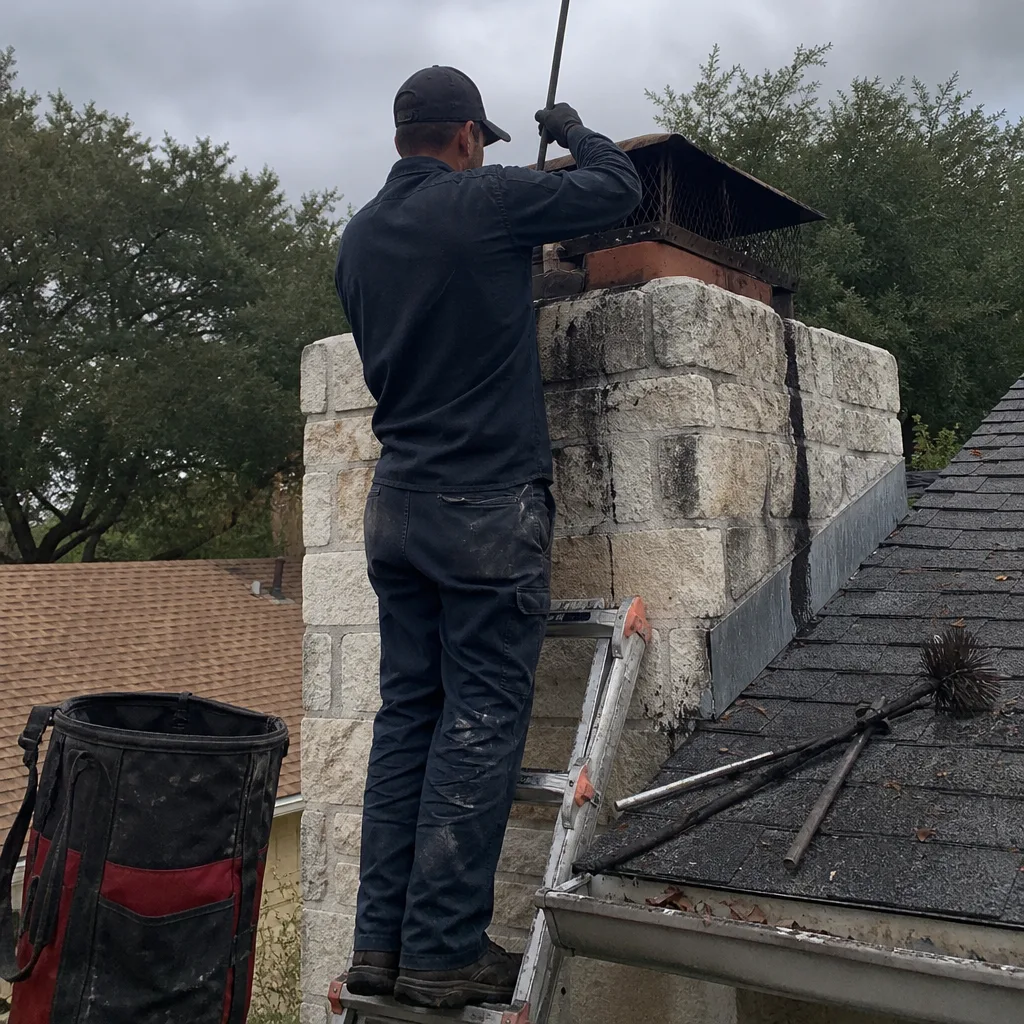 Before
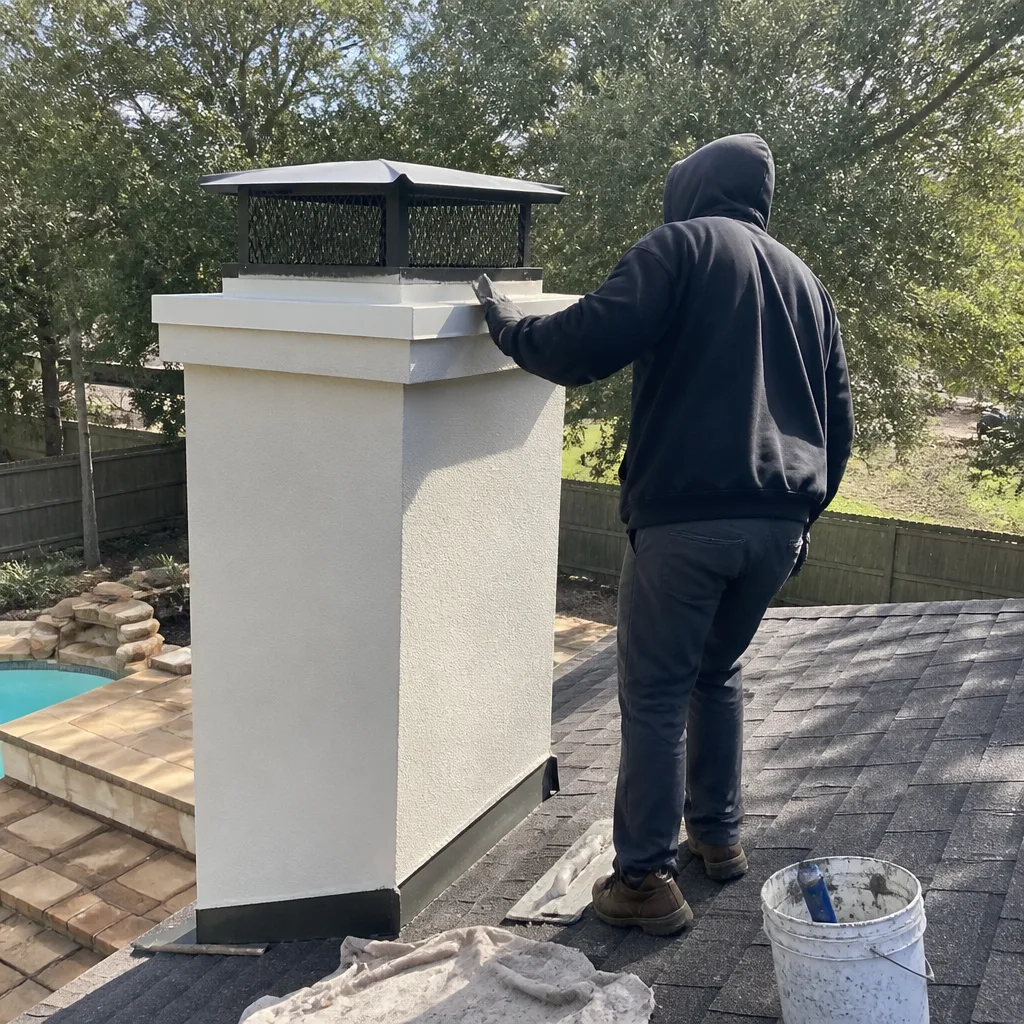 After
After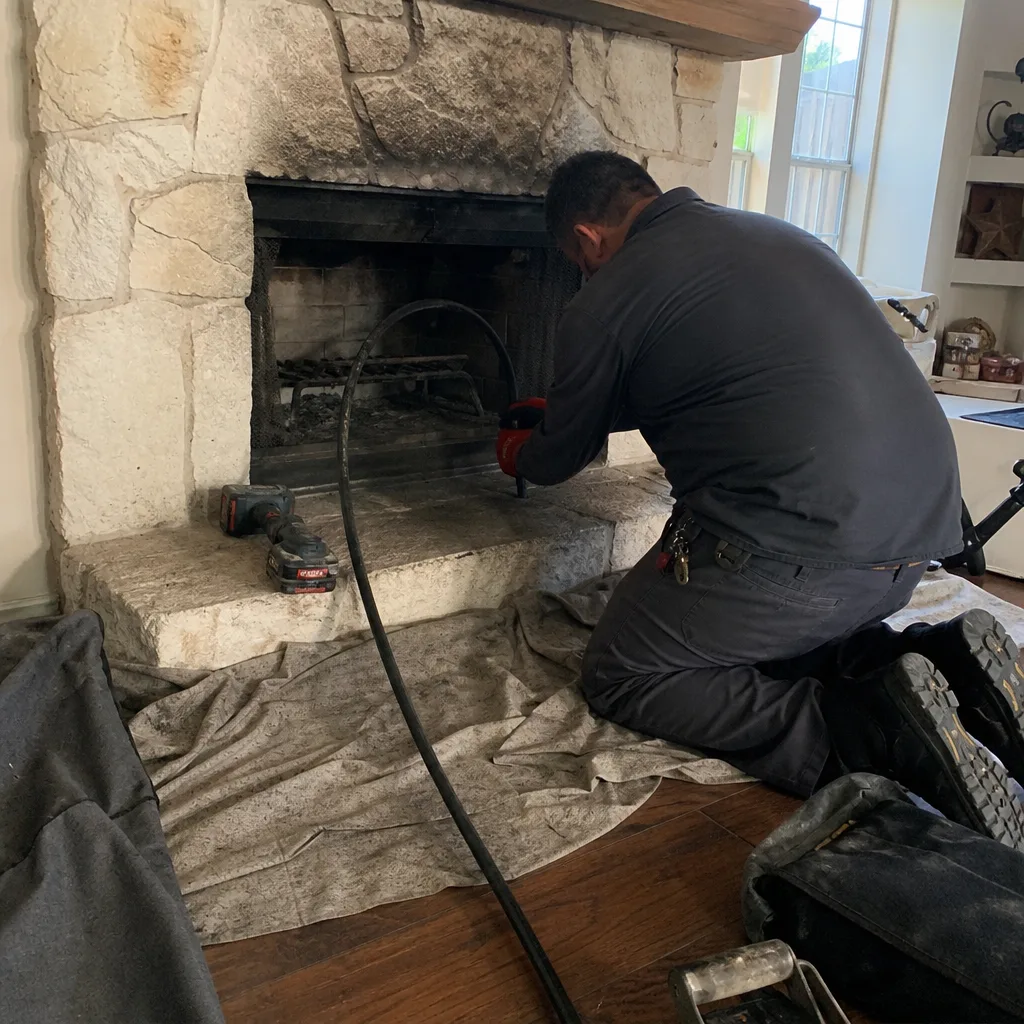 Before
 After
After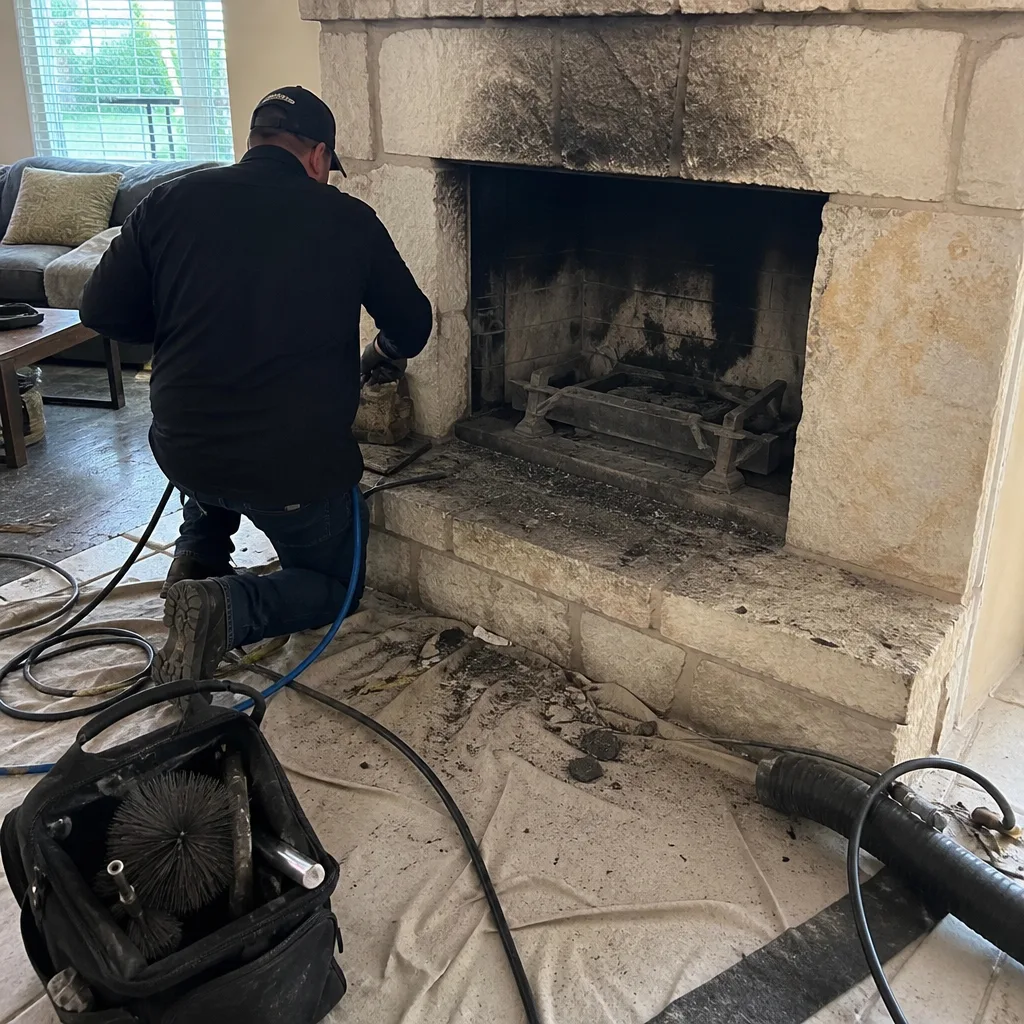 Before
 After
AfterWhen to Call a Professional
Call a chimney professional if you notice any of these specific signs: a strong campfire-like smell in the living room even when the fireplace isn’t in use, visible black glaze or flaking material inside the firebox, smoke backing into the room when you light a fire, water stains on the ceiling or walls near the chimney, or sounds of animals in the flue. If you’ve just bought a home in San Antonio and no one has inspected the chimney since the sale, schedule a Level 2 inspection with a camera scan. If it’s been more than twelve months since your last cleaning, it’s time. Kindling Chimney San Antonio offers free estimates in San Antonio. Call (361) 491-3153 and a live person will answer, day or night.
Frequently Asked Questions
A standard chimney sweep in San Antonio costs between $189 and $280 for most single-story homes, with larger or harder-to-access chimneys running up to $350. The price should include flue brushing, smoke chamber cleaning, damper inspection, and a basic safety check. Call (361) 491-3153 for an exact written quote.
You need a new liner if a camera inspection shows cracked, spalling, or missing flue tiles, or if the chimney has no liner at all. Not every chimney with some creosote buildup needs relining. A reputable company will show you camera images of the damage before recommending a liner, and will use products like HeatShield or Gelco to repair localized damage when a full replacement isn’t necessary. If a technician recommends a liner without camera evidence, get a second opinion.
Once per year, even if you only burn ten or twelve fires a season. San Antonio’s intermittent burn pattern and humid climate create hard, glazed creosote that builds up across multiple seasons, and low-use chimneys are common nesting sites for birds and entry points for moisture. For a complete maintenance calendar, see our Seasonal Chimney Cleaning Care for San Antonio: Year-Round Homeowner’s Guide.
Skipping cleaning means creosote continues to accumulate and harden, which increases the temperature required to ignite it and reduces the efficiency of your fireplace draft. Water damage from a cracked crown or missing cap continues unchecked. The most common outcomes are excessive smoke in the living room, a strong odor during humid months, and repair costs that could have been avoided with early detection. The chimney won’t necessarily catch fire the year you skip. But the damage compounds.
Availability depends on the season, but our live phone line is answered 24/7 and we’ll tell you our earliest open slot immediately. During the October through December rush in San Antonio, same-week appointments are common but not guaranteed. Call (361) 491-3153 to check current availability.
Yes. Where there’s a choice between products, we use pet-safe options. Creosote removal chemicals used during a professional sweep are applied inside the flue, not in the living space, and we run HEPA-filtered vacuums to keep fine particulates out of your home’s air. The work area is fully contained with drop cloths, and the firebox is cleaned thoroughly before we leave.
The Bottom Line
San Antonio fireplaces don’t need special treatment because they’re used heavily. They need consistent treatment because they’re used lightly and sporadically, which creates a denser, harder creosote pattern that compounds over multiple seasons. A proper chimney cleaning in San Antonio costs $189 to $350, includes the smoke chamber and cap inspection, and comes with a written price before work starts. Water damage from our limestone soil and humidity cycles attacks mortar and flue tiles year-round, even on chimneys that never see a fire. One annual visit, with a camera scan when appropriate, is the difference between a $250 cleaning and a $4,000 liner replacement. For your Kindling Chimney San Antonio home heating needs, start with a cleaning and honest inspection. Call (361) 491-3153 and a live person will answer.
Written by Danny Cortes, Owner at Kindling Chimney San Antonio, serving San Antonio since 2003.