
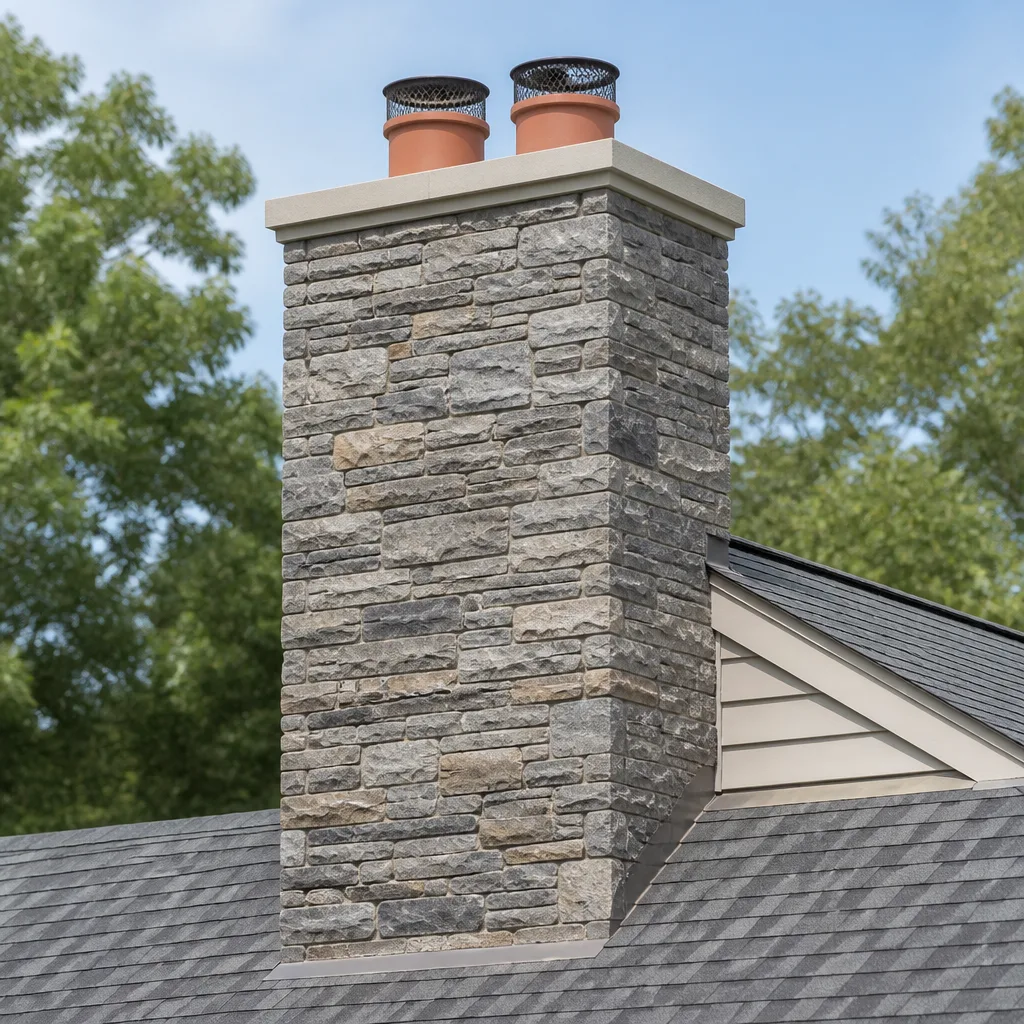
 Masonry repair
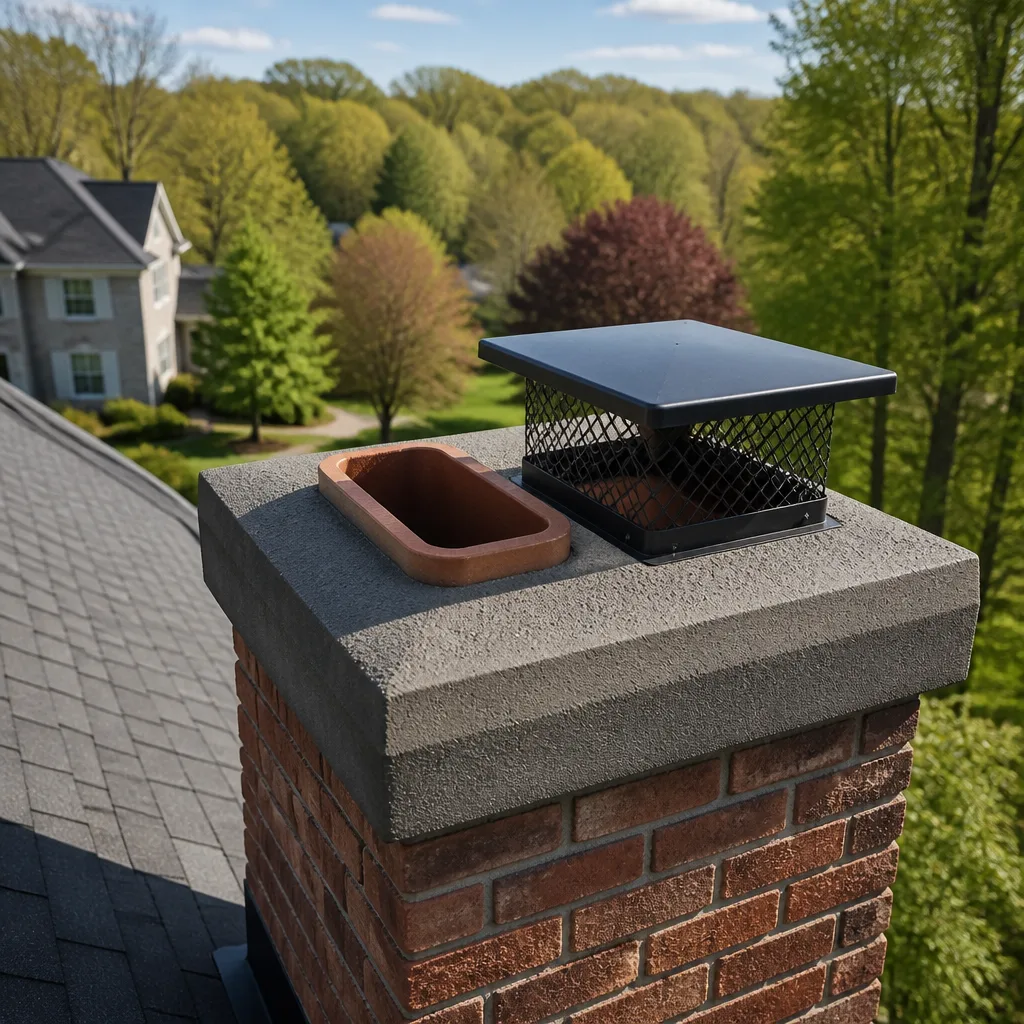 Sweep & inspection
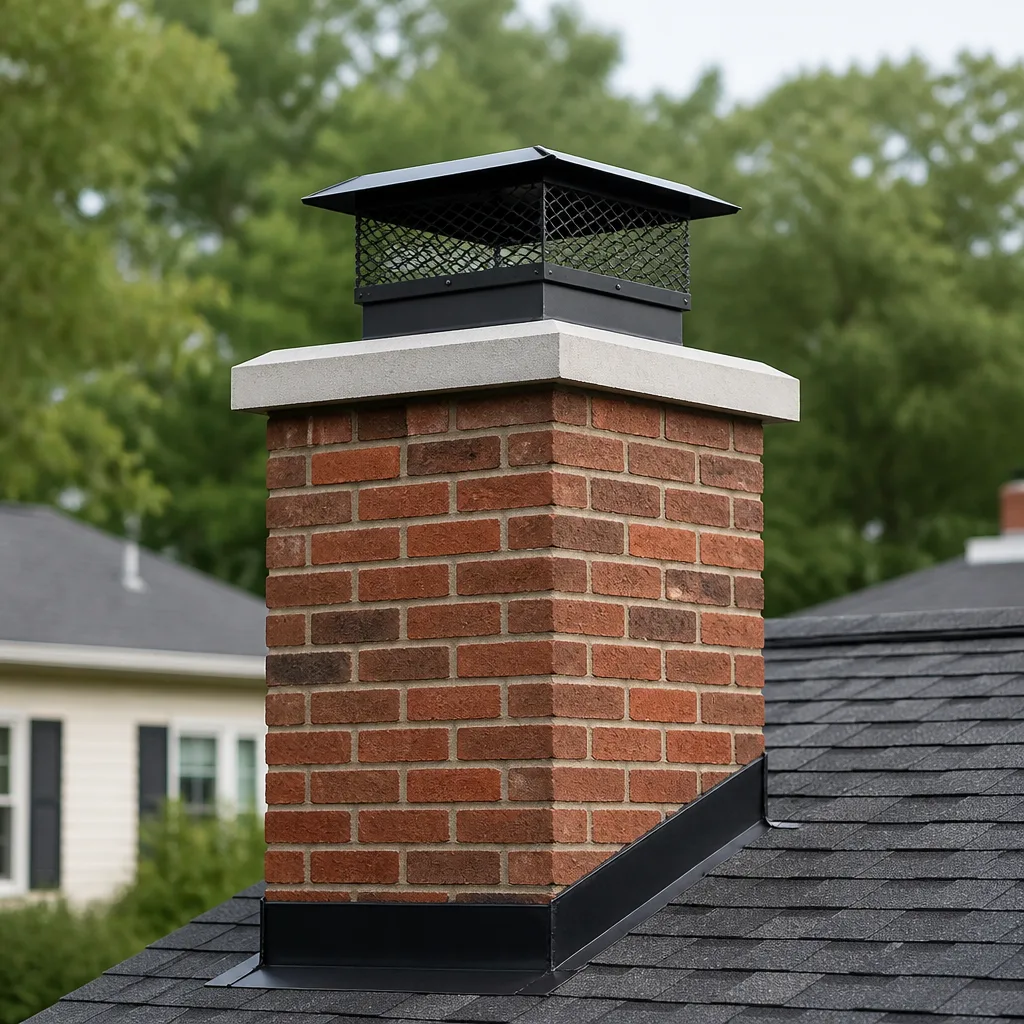 Caps & crowns
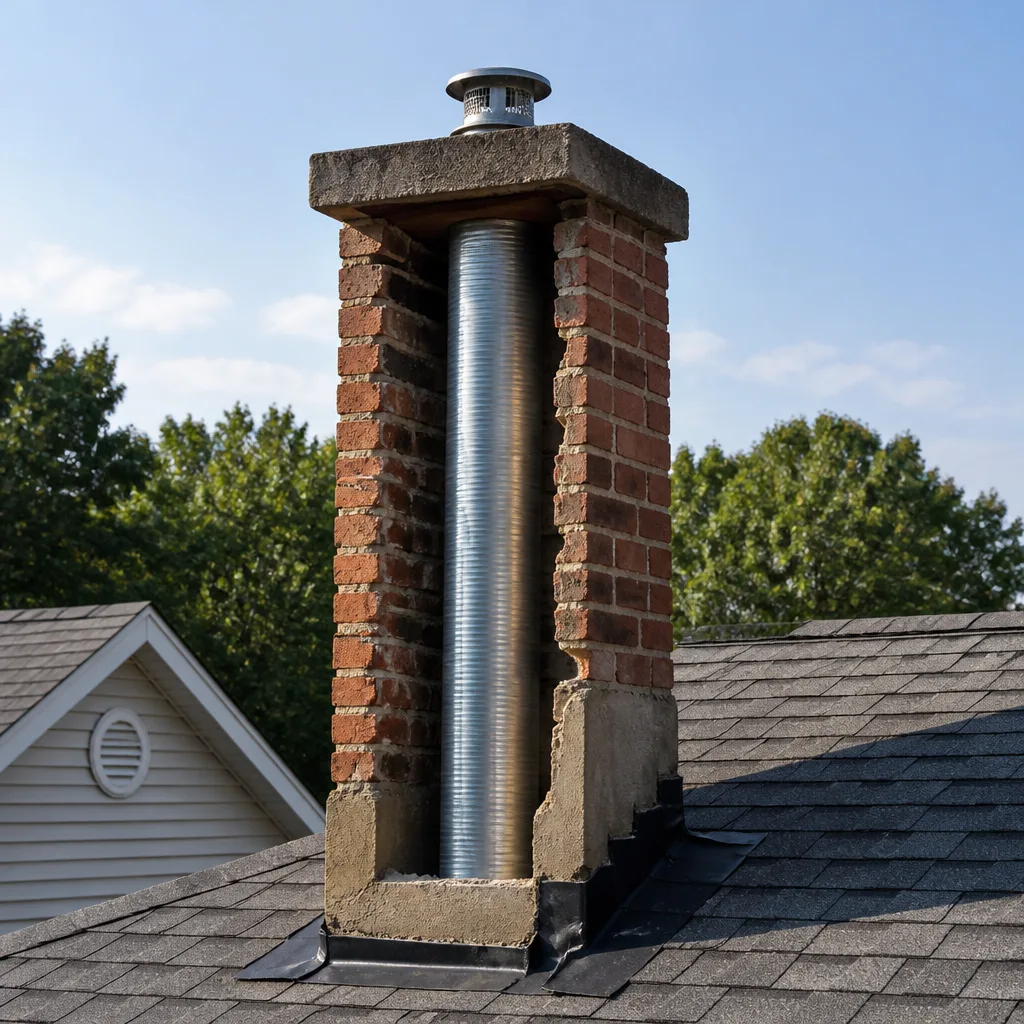 Flue relining
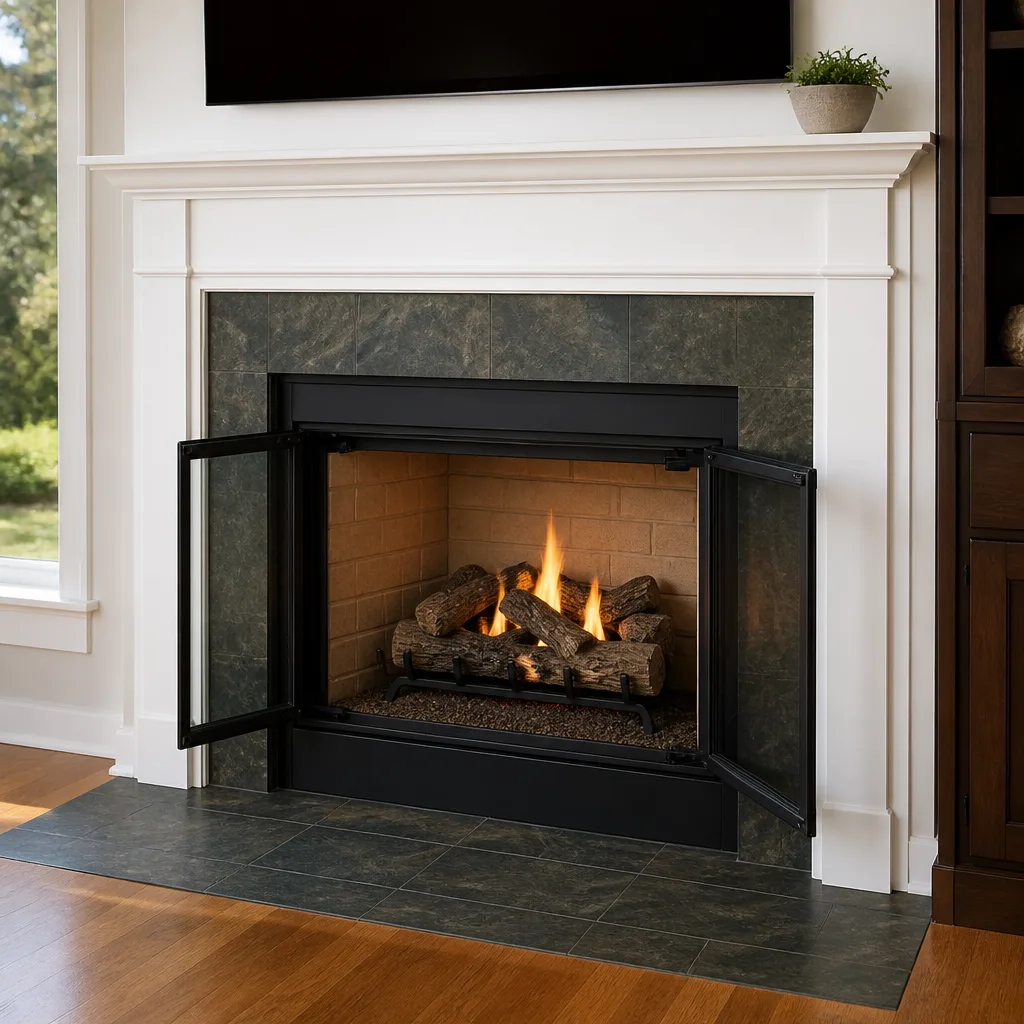 Gas fireplace service
Level 1 sweep and inspection to the NFPA 211 annual standard - flue, crown, cap, and flashing checked and photographed
Chimney sweep logs do not sweep chimneys. They loosen some creosote - which then falls where a brush and vacuum still have to collect it.
Olympia Chimney Crown Repair: The San Antonio Owner’s Guide
If you have an Olympia Chimney system and the concrete crown on top of your chimney has started cracking, spalling, or letting water through, we stock and install crown repair materials sized to match Olympia flue tiles and chase dimensions. Most crown repair work in San Antonio runs between $450 and $900 installed, depending on crown condition, chimney height, and chase configuration.

The way most San Antonio homeowners discover this is unglamorous: a water stain on the ceiling near the fireplace, a damp smell in the firebox after a hard rain, or a small pile of concrete grit on the roof or in the gutter after a windy spring storm. By the time you can see it from the ground, the crown has usually been failing for a season or two. The good news is crown repair is one of the most straightforward chimney fixes we do, and it’s on our truck every week.
Which Olympia Chimney Models This Applies To
Olympia Chimney manufactures a range of factory-built and masonry chimney components, and the crown detail varies by system. For their masonry chimney line, the crown is field-formed or pre-cast and sits directly over the flue tile and brick. For their factory-built fireplaces, the assembly typically includes a galvanized chase cover that does the crown’s job, with a storm collar sealing the flue pipe where it exits.
Here’s the compatibility gotcha worth knowing: an Olympia masonry crown is sized to the flue tile dimensions, not the fireplace model. Smaller Olympia flues (13″ x 13″ common) need a crown with less overhang than the larger (17″ x 17″) tiles. When a homeowner tries to reuse an old crown form from a different chimney, the overhang is often wrong and water runs straight down the brick face. We measure the flue tile and match the crown form to it before mixing anything.
On the OEM-versus-aftermarket question for Olympia specifically: Olympia’s pre-cast crowns are solid but harder to source locally when a homeowner needs one in a week, not a month. We use a quality aftermarket concrete crown mix rated for Texas sun and rain exposure, and we bond it to the chimney crown area with a compatible acrylic primer. For chase covers on Olympia factory-built units, we can fabricate a stainless steel replacement if the original has rusted through. Both approaches have held up well for our San Antonio customers.
Styles & brands we work with
Signs Your Olympia Chimney Crown Repair Is Failing
- Hairline cracks running across the crown surface. This is the classic first sign. Small cracks open and close with San Antonio’s hot days and cool nights, and every time they open, water gets a little deeper. Re-sealing early saves the brick below.
- Spalling, which is concrete flaking off in chips or small plates. This means water has saturated the concrete and the freeze-thaw cycle, or just our intense summer heat, has broken the bond holding the surface together. You’ll often see small concrete particles in the gutter below.
- Visible water staining on interior drywall or wood near the chimney chase. Water that gets past the crown travels down the flue tile or through the brick and shows up as a brownish stain well below the roofline. Don’t assume a roof leak until the crown is checked.
- White mineral deposits, called efflorescence, on the chimney’s outside face. When water moves through masonry, it carries salts that get deposited on the surface as the water evaporates. Efflorescence below the crown line is a reliable cue that moisture is entering at or above that line.
- A rusted or corroded chase cover on an Olympia factory-built fireplace. Galvanized metal eventually gives up in San Antonio humidity and rainfall. When rust shows through, that cover is no longer keeping water off the firebox and flue, and you need the crown-equivalent job done on the metal.
See the difference
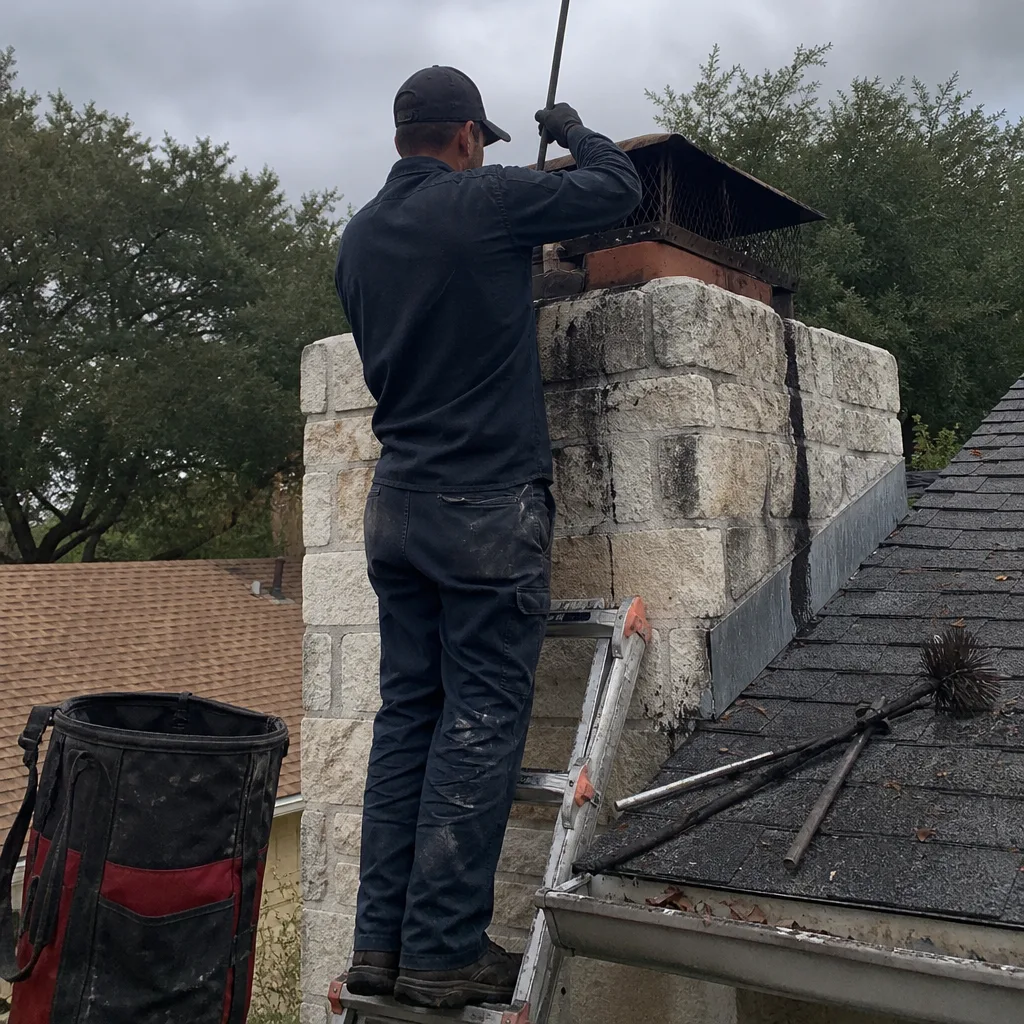 Before
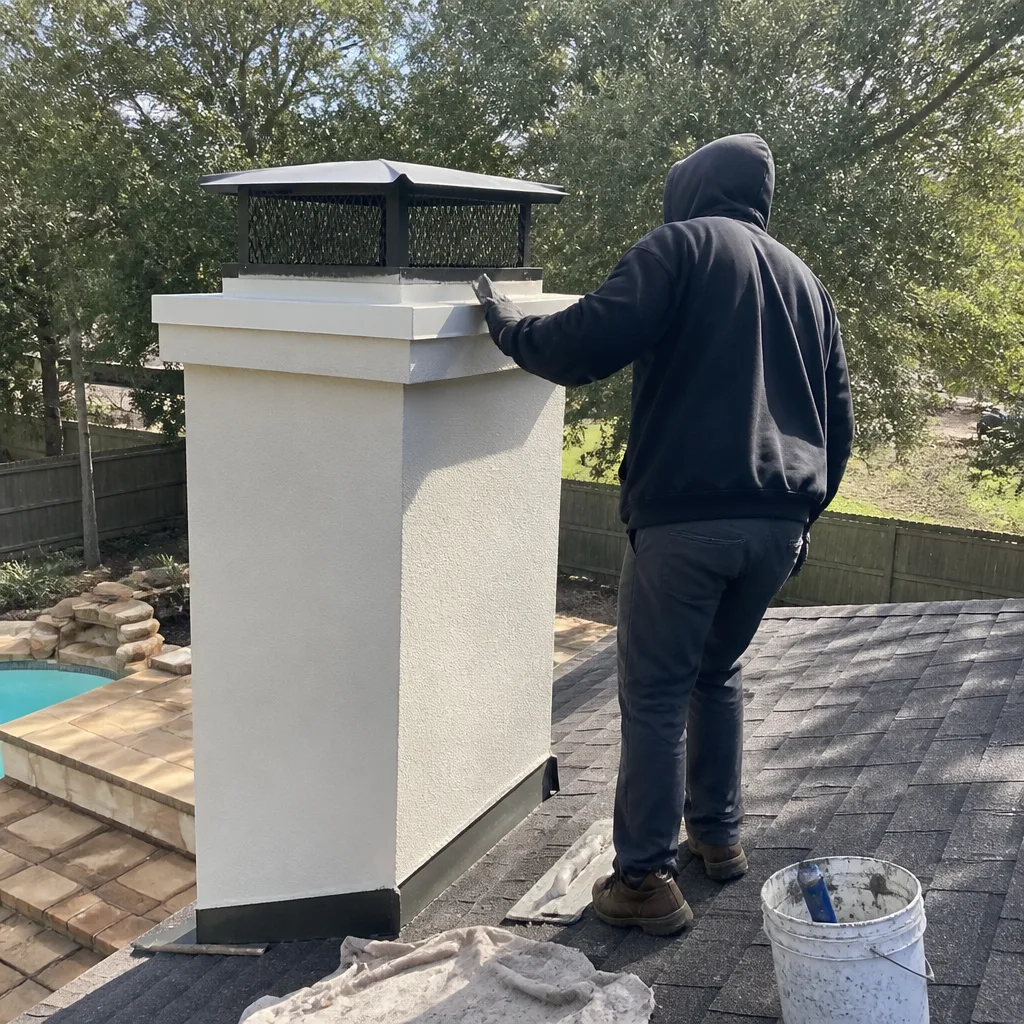 After
After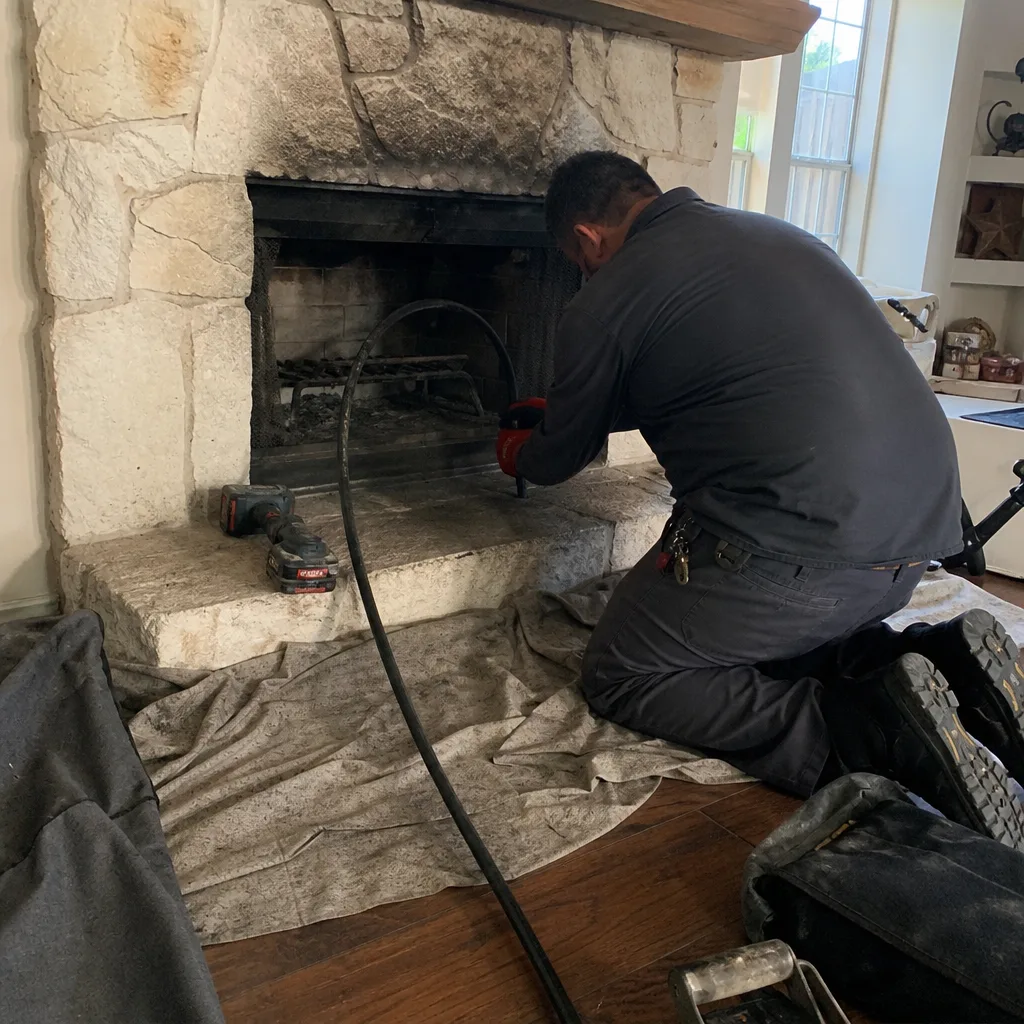 Before
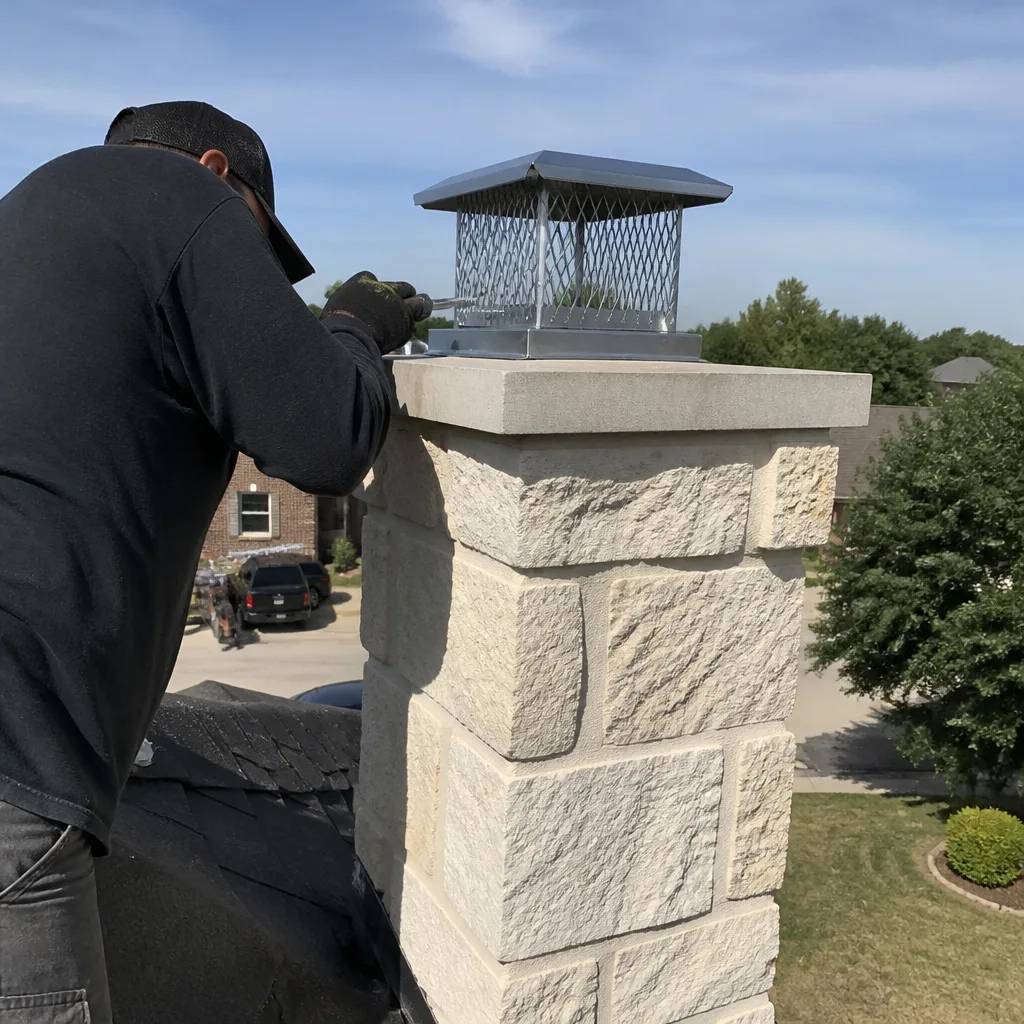 After
After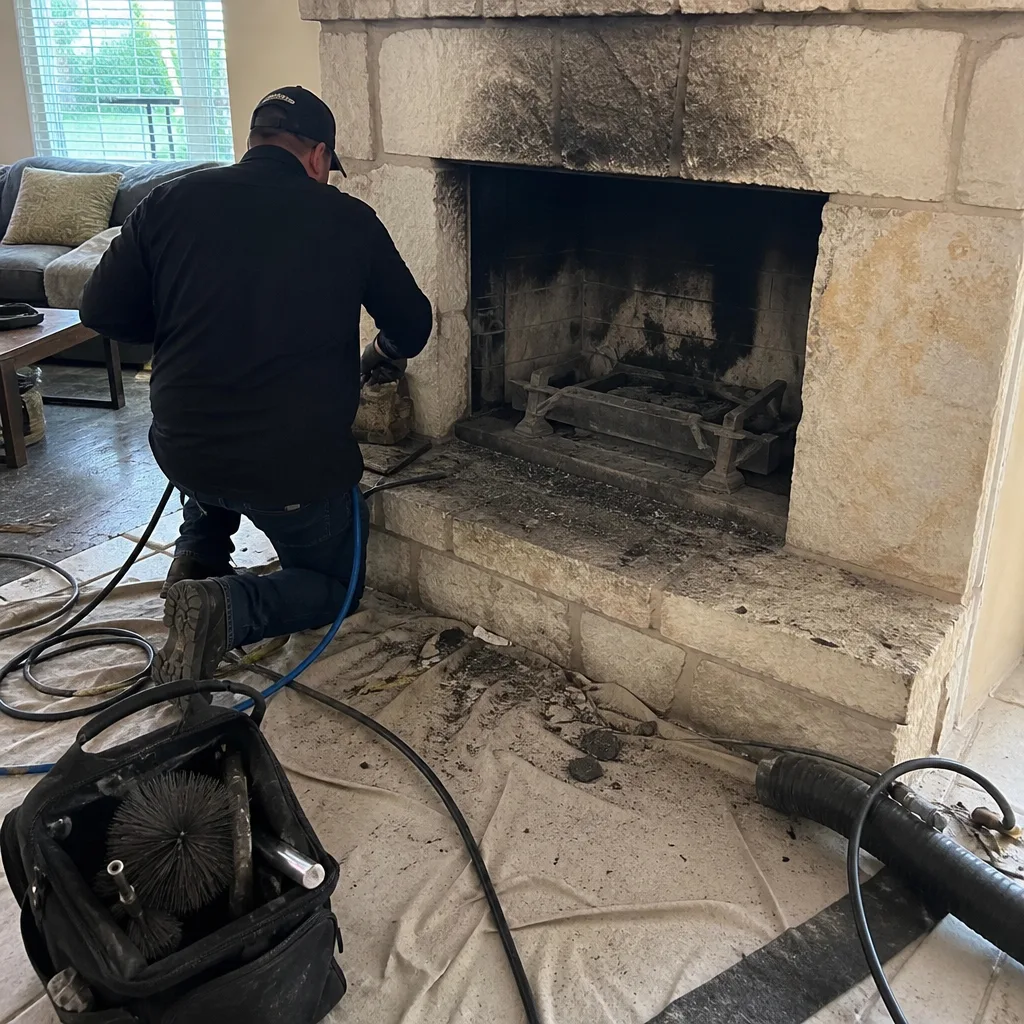 Before
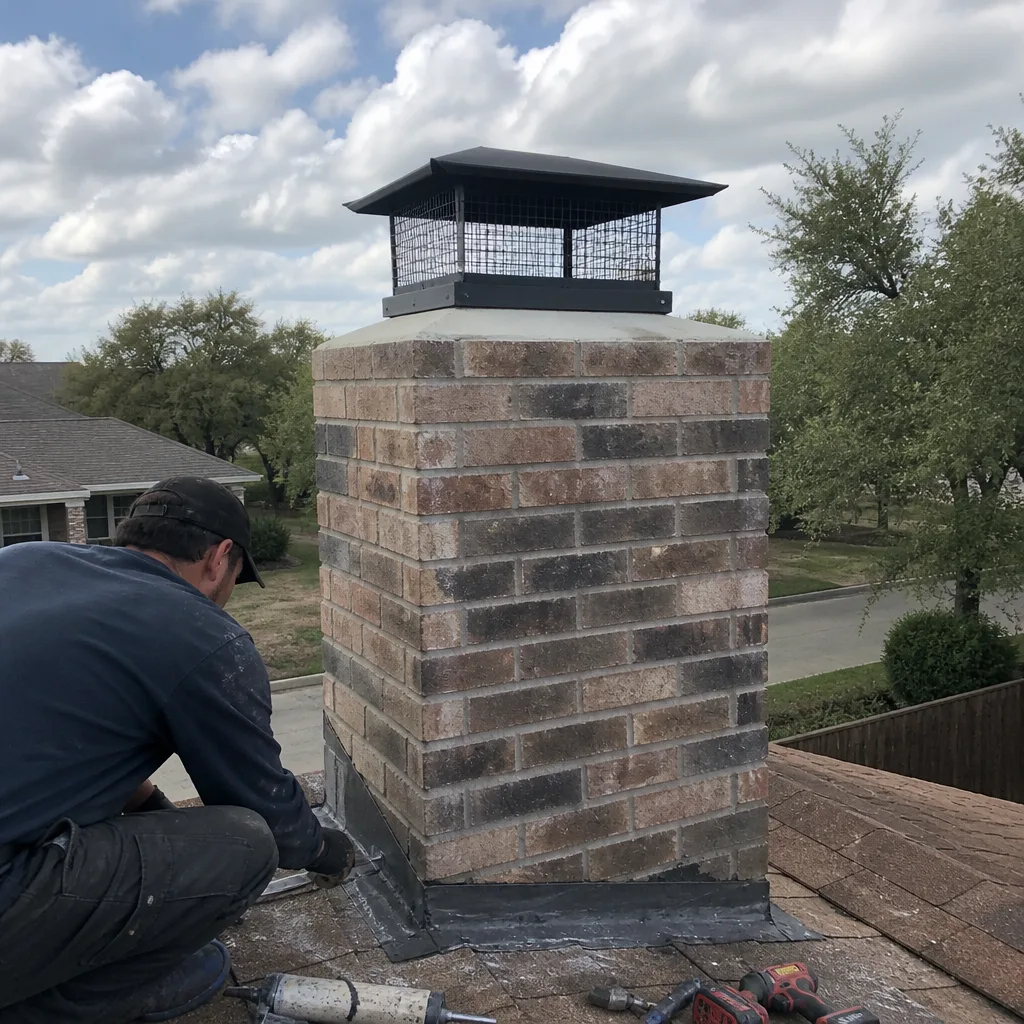 After
AfterReplacement Cost & What’s Included
For a typical Olympia masonry chimney in the San Antonio area, crown resealing runs $450 to $600. Full crown recasting, where we grind the old surface and apply a new concrete crown, moves into the $600 to $900 range. Increased height, steep roof pitch, or a chimney that needs scaffolding rather than ladder work pushes the cost toward the top of that range.
What’s included every time: we remove the old loose crown material, wire-brush the surface, apply a bonding primer, build the new crown with a proper drip edge that moves water off the brick face, and allow proper cure time before leaving. The written price you approve before any work starts includes labor, materials, and clean-up. Shoe covers and drop cloths are down if we pass through the home, and our 365-Day Done Right Promise backs the work. That’s the guarantee phrased plainly: if it’s not done right, we make it right.
DIY or Call Us?
We’ll be honest about where we draw the line. A homeowner with a safe ladder setup can photograph the crown and inspect for visible cracks. That’s worth doing. But working on a chimney crown means kneeling on a sloped or flat roof surface, handling trowels and concrete mix at height, and getting the drip edge and slope right so water actually sheds. Get the slope wrong and you’ve made the problem worse while kneeling twenty feet up.
Danny Cortes, our owner, will tell you he’s seen more than a few well-intentioned DIY crown patches that looked fine from the ground and leaked within a year because the mix wasn’t cured for San Antonio’s summer sun. If you want us to take a look, the inspection is straightforward: we’ll assess the crown, give you a written price, and schedule the work at your pace. Call us at (361) 491-3153 and a real person answers, any hour.
FAQs
A properly built and cured crown in San Antonio typically lasts 10 to 15 years before it needs meaningful attention, with resealing every 5 to 7 years extending that lifespan. Our Texas heat and occasional freeze cycles stress the concrete, but the drip edge and proper slope are what buy you the extra years.
If the cracking is limited to surface hairline fractures and the crown still has its structural integrity, yes, resealing with a high-quality elastomeric sealant is the correct repair and costs less. Once the concrete spalls or chunks break away, recasting is the only honest fix. We’ll show you photos before recommending either path, and if a simple reseal will hold, that’s what we’ll recommend. Call (361) 491-3153 and we’ll give you a straight answer.
Most crown resealing or recasting jobs take half a day on site. We factor in the time for material prep, application, and the early stage of curing, and we’ll leave the site clean before we go. Weather can stretch the schedule; rain in San Antonio means we wait for dry conditions to do the job right.
Yes, we keep crown mix, bonding primer, and elastomeric sealant on the truck for standard Olympia flue tile sizes, and we can fabricate chase covers for Olympia factory-built units. For any unusual measurements, we source quickly through our supplier channels that include DuraFlex, HeatShield, and Gelco parts as well.
Written by Danny Cortes, Owner, Kindling Chimney San Antonio at Kindling Chimney San Antonio, serving San Antonio and nearby areas.