
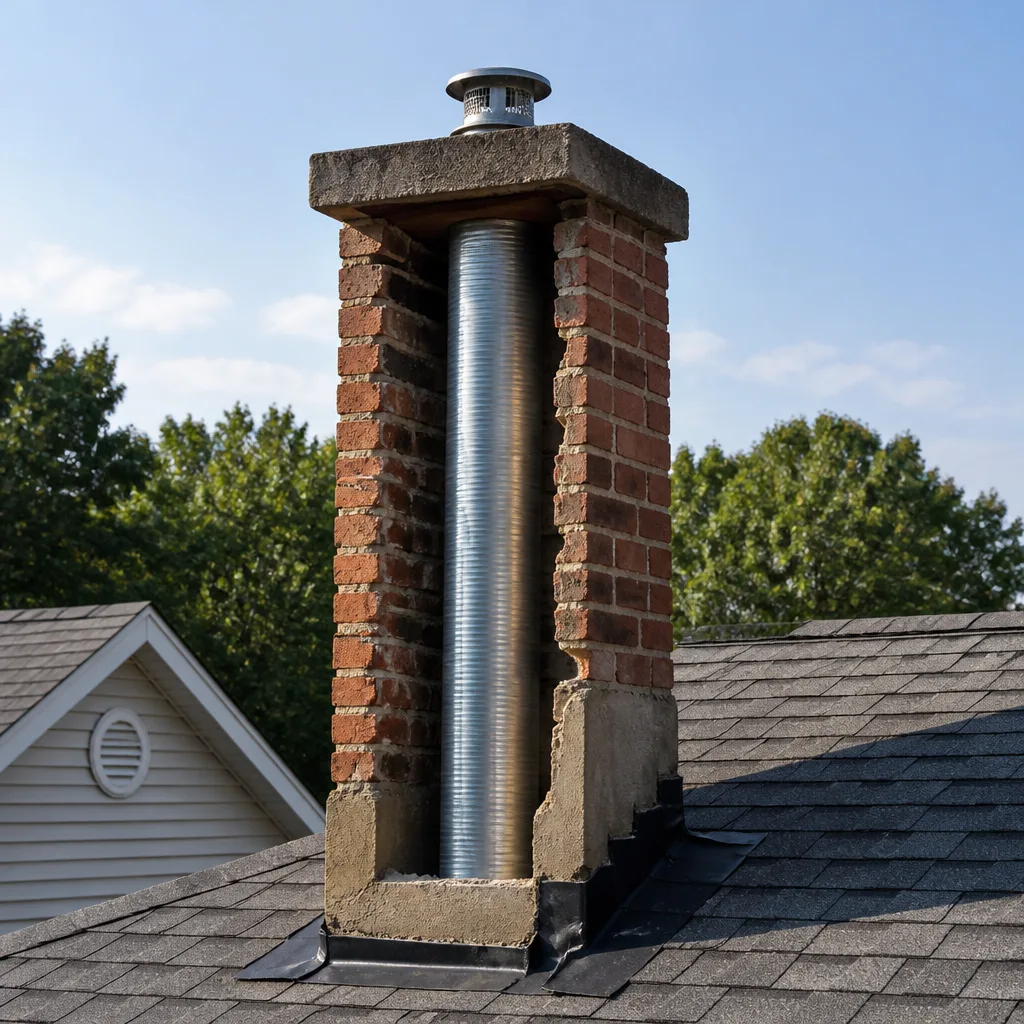
 Flue relining
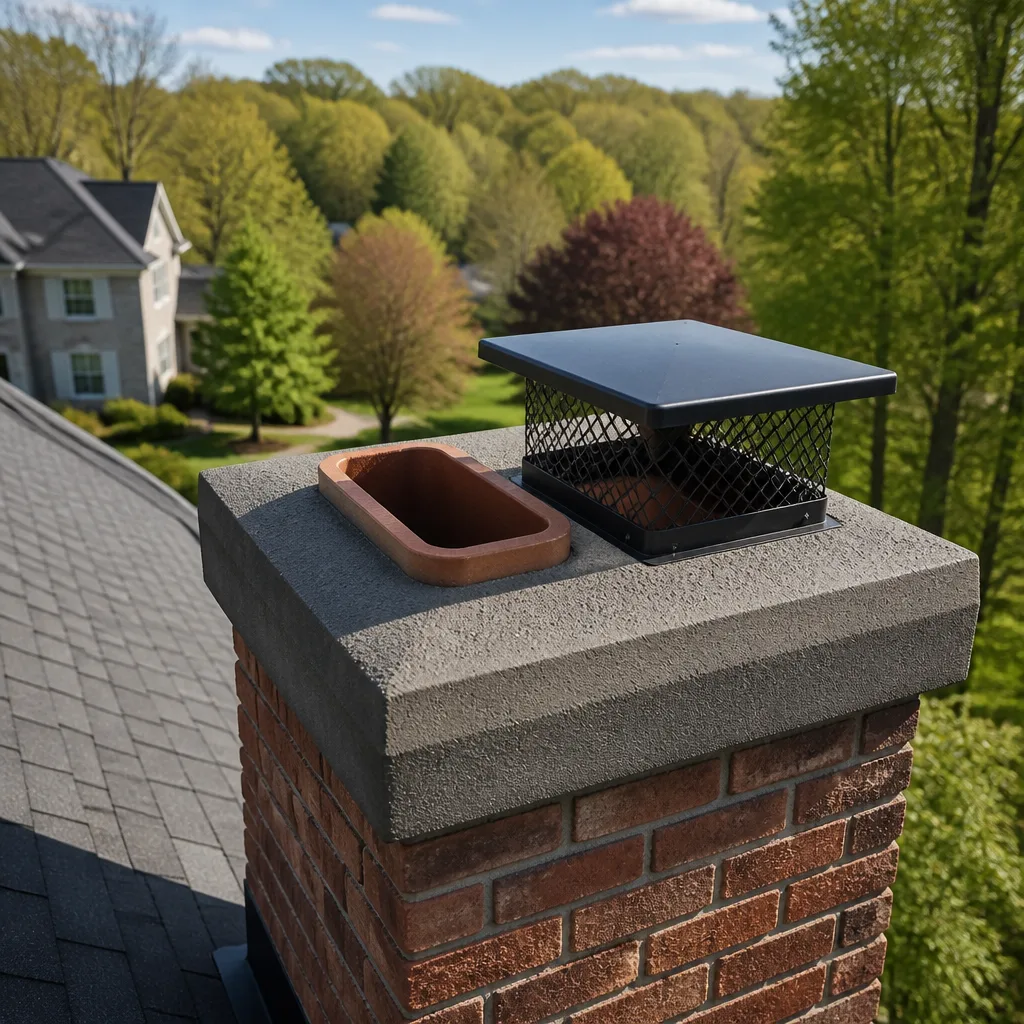 Sweep & inspection
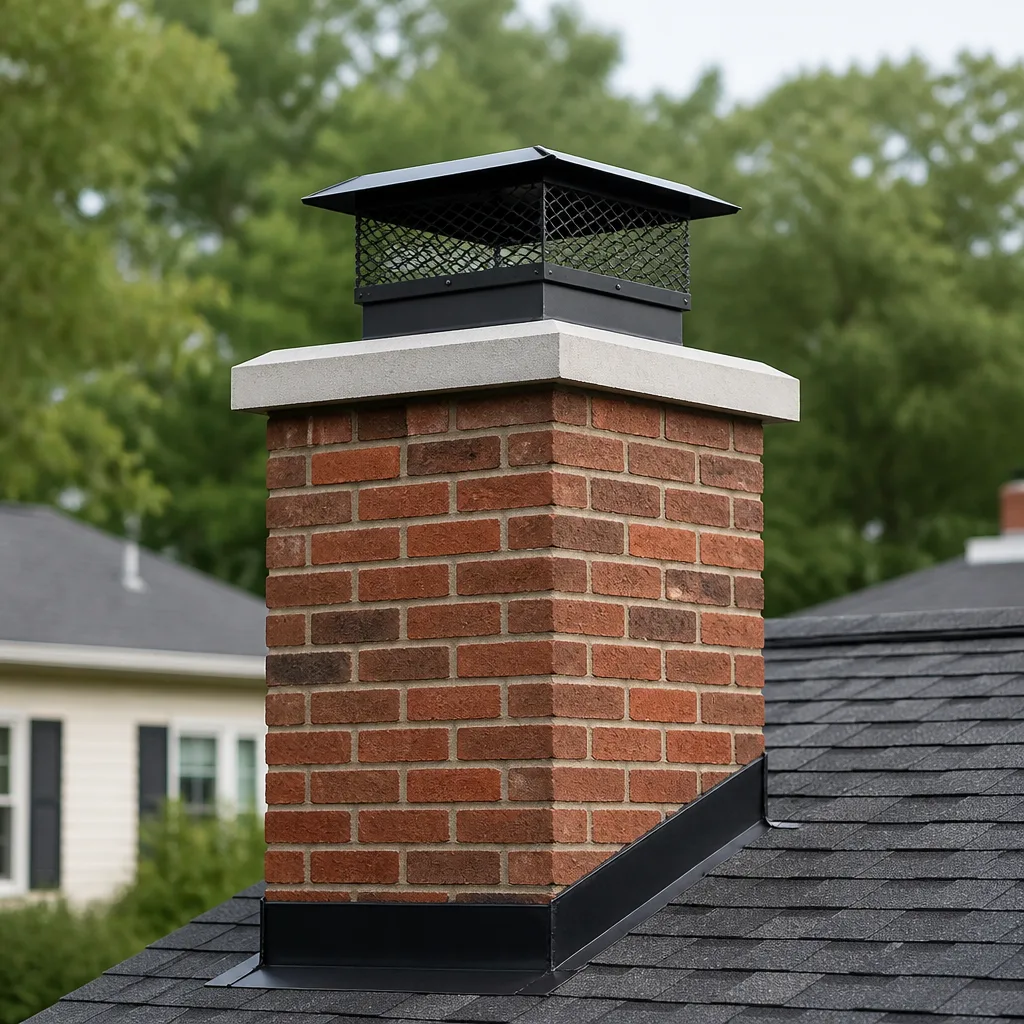 Caps & crowns
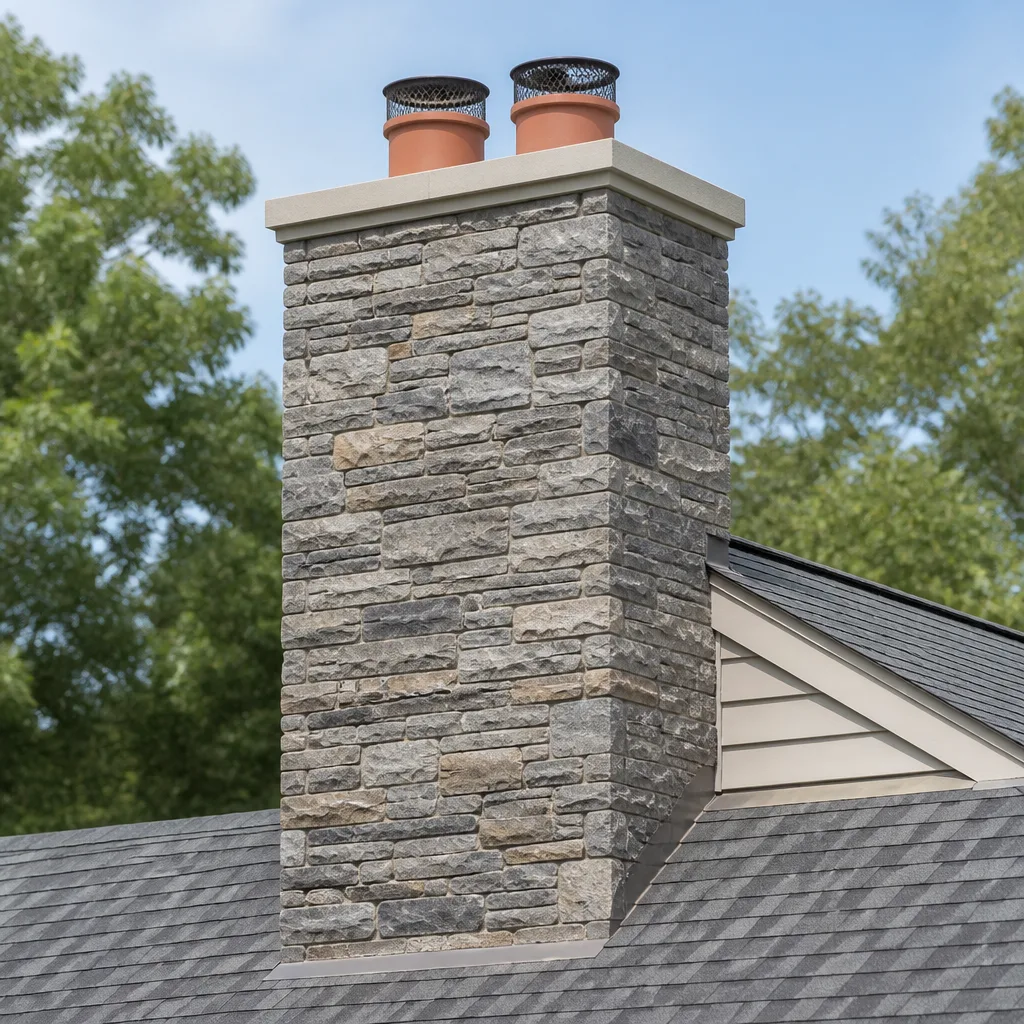 Masonry repair
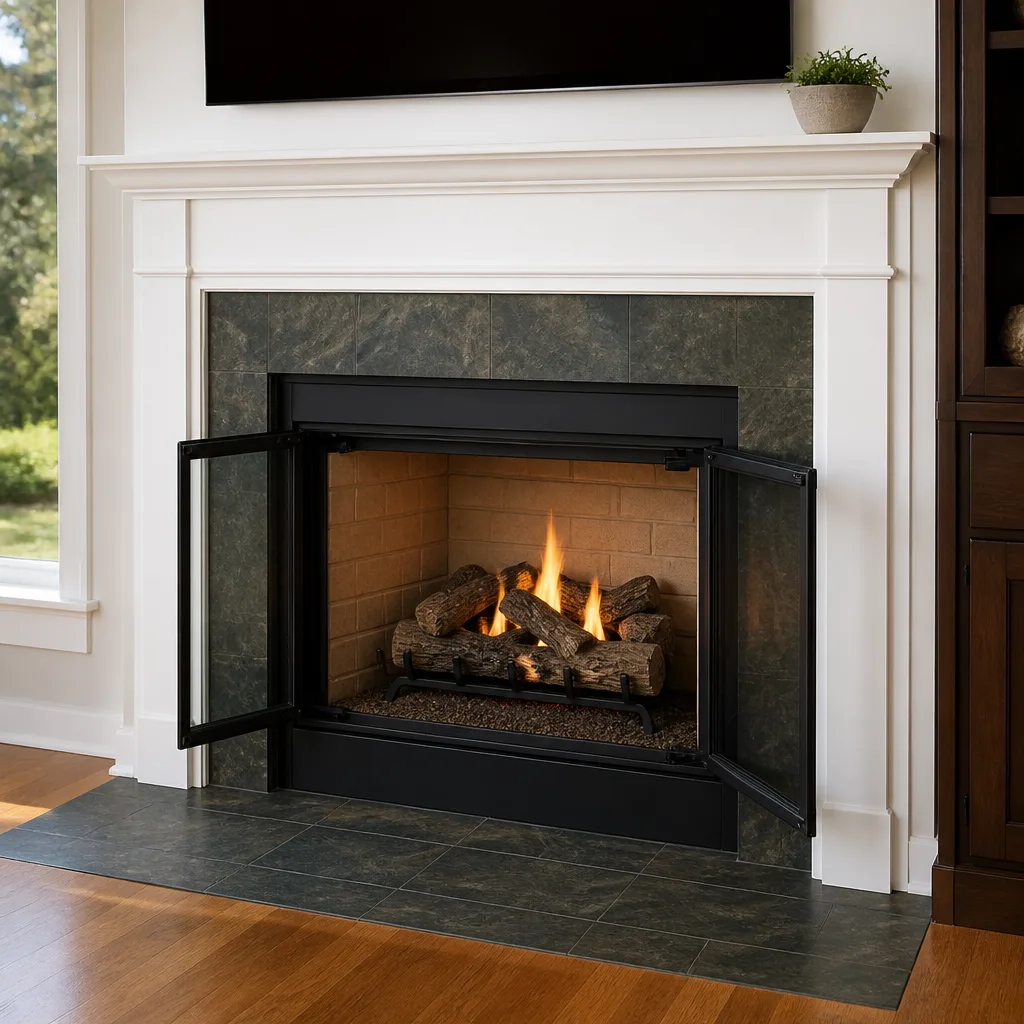 Gas fireplace service
Level 1 sweep and inspection to the NFPA 211 annual standard - flue, crown, cap, and flashing checked and photographed
Chimney sweep logs do not sweep chimneys. They loosen some creosote - which then falls where a brush and vacuum still have to collect it.
Famco Flue Liner Replacement: The San Antonio Owner’s Guide
If you have a Famco flue liner that’s cracked, corroded, or no longer sealing, we stock Famco-compatible replacement liners and install them for San Antonio homes, with most replacements running between $1,800 and $3,200 installed depending on liner length, diameter, and roof access. We carry the common Famco sizes on our trucks, so most jobs in San Antonio are done in a single visit once we’ve measured and confirmed the fit. The way most owners find out their Famco liner has failed is through a Level 2 inspection: the camera goes down, the screen shows a split seam or rust-through, and suddenly the fireplace that worked fine last winter needs a liner decision before the next cold snap.

We also stock parts for DuraFlex, HeatShield, and Gelco systems, so if your liner turns out to be from a different brand than you thought, we’re not starting from scratch. The honest truth: a failed Famco liner rarely announces itself with drama. It shows up as a little more dust in the firebox, a faint smell that lingers after the fire’s out, or a chimney sweep pointing out flaking metal during a routine clean. That’s the point where replacing it becomes a matter of protecting the house, not just the fireplace.
Which Famco Models This Applies To
Famco has made flexible stainless steel chimney liners for decades, and the replacement path depends on which generation you have. The older Famco liners, often sold as part of stove and fireplace insert kits, came in 4-inch, 5-inch, 6-inch, and 8-inch diameters, mostly in 316Ti stainless for wood-burning applications. Newer Famco liner sections are interchangeable with competitors like DuraFlex as long as the diameter, alloy, and wall thickness match, because the liners are built to meet the same UL 1777 standard. That matters: a 6-inch 316Ti liner from Famco and a 6-inch 316Ti liner from another UL-listed maker do the same job, and we’ll tell you when a quality aftermarket equivalent saves you money and when the Famco label is worth paying for.
The gotcha with Famco, and it’s one we explain to homeowners regularly, is that Famco’s older two-ply liners and their newer smooth-wall liners need different connectors and top plates. You can’t mix a smooth-wall liner section with a corrugated Famco coupler and expect a proper seal. When we arrive, we look at the exposed section at the top of the chimney and the appliance connection at the bottom, measure the inside diameter with a caliper, and match the replacement to what’s actually in the flue, not just what the stove’s manual says should be there. San Antonio’s clay tile chimneys were often built with odd interior dimensions, and a liner that fit in the showroom doesn’t always fit the flue you have.
Kindling Chimney San Antonio is an independent service provider; we’re not affiliated with Famco, and we don’t pretend to be. We carry Famco-compatible liners and the tooling to install them because our customers ask for them by name, and because we know which Famco generations are still worth repairing into a working system versus which ones should be fully replaced.
Styles & brands we work with
Signs Your Famco Flue Liner Replacement Is Failing
- Rust flakes in the firebox or around the damper. A stainless liner shouldn’t shed rust, so when it does, that’s water finding a seam or a pinhole. In San Antonio’s humidity swings, moisture sits in the flue between fires, and even 316Ti eventually gives way if the original install wasn’t pitched correctly.
- A persistent smell after the fire is out, like wet ash or metal. Cracks in the liner let combustion gases and moisture seep into the chimney cavity instead of exhausting up and out. That smell is your house telling you the liner isn’t containing what it used to.
- Visible cracking or peeling at the seams when the liner is inspected. Famco liners are spiral-welded, and the weld seam is the usual failure point. On a camera inspection, a failing seam looks like a zipper opening up, and it’s something we can show you on the screen, not just describe.
- Reduced draft, smoke rolling into the room, or a fireplace that’s harder to start. A liner with internal corrosion or a collapsed section narrows the effective flue diameter, which chokes the draft. If your stove worked fine for years and now the glass soots up fast, the liner is often the quiet reason.
- Water stains on the ceiling near the chimney or damp brickwork in the attic. A failed liner often lets condensation escape into surrounding masonry and framing. By the time you see a water stain, the liner has been compromised for at least one full season, sometimes two.
See the difference
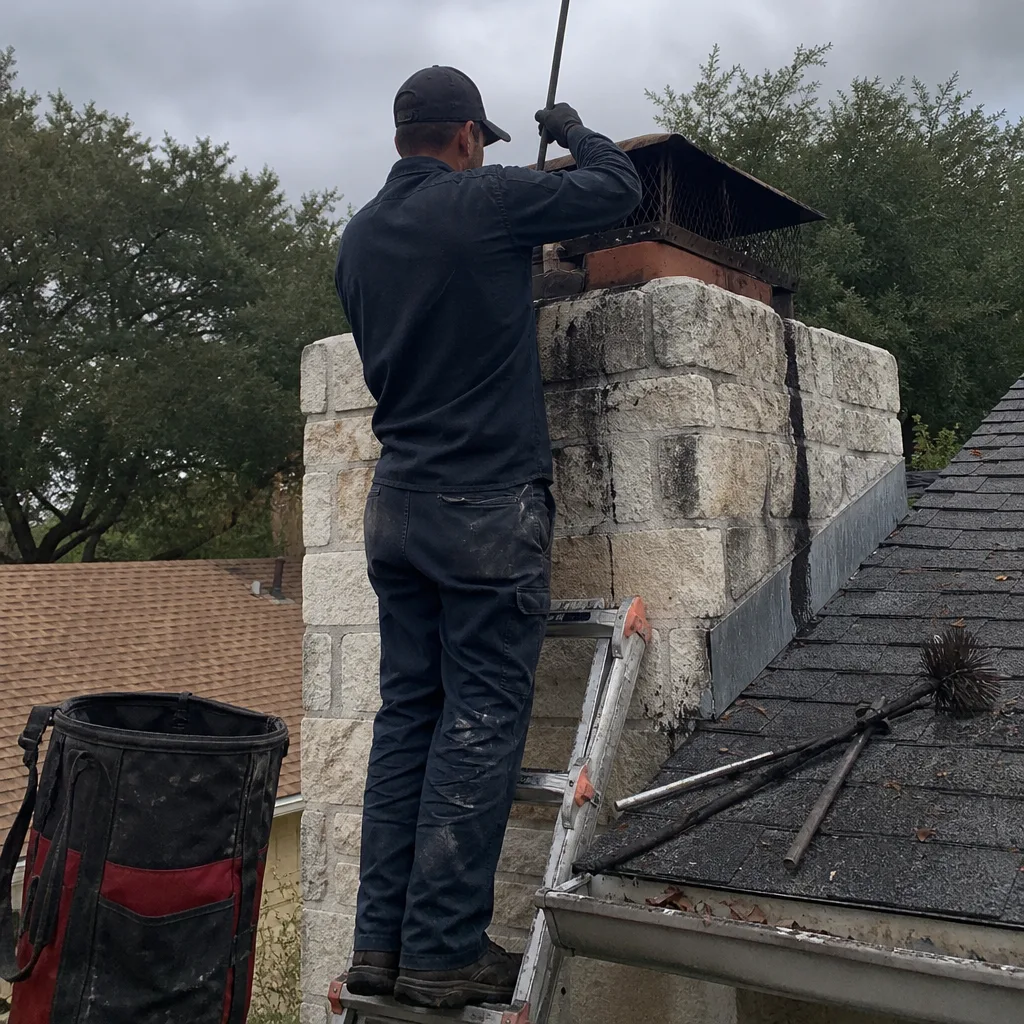 Before
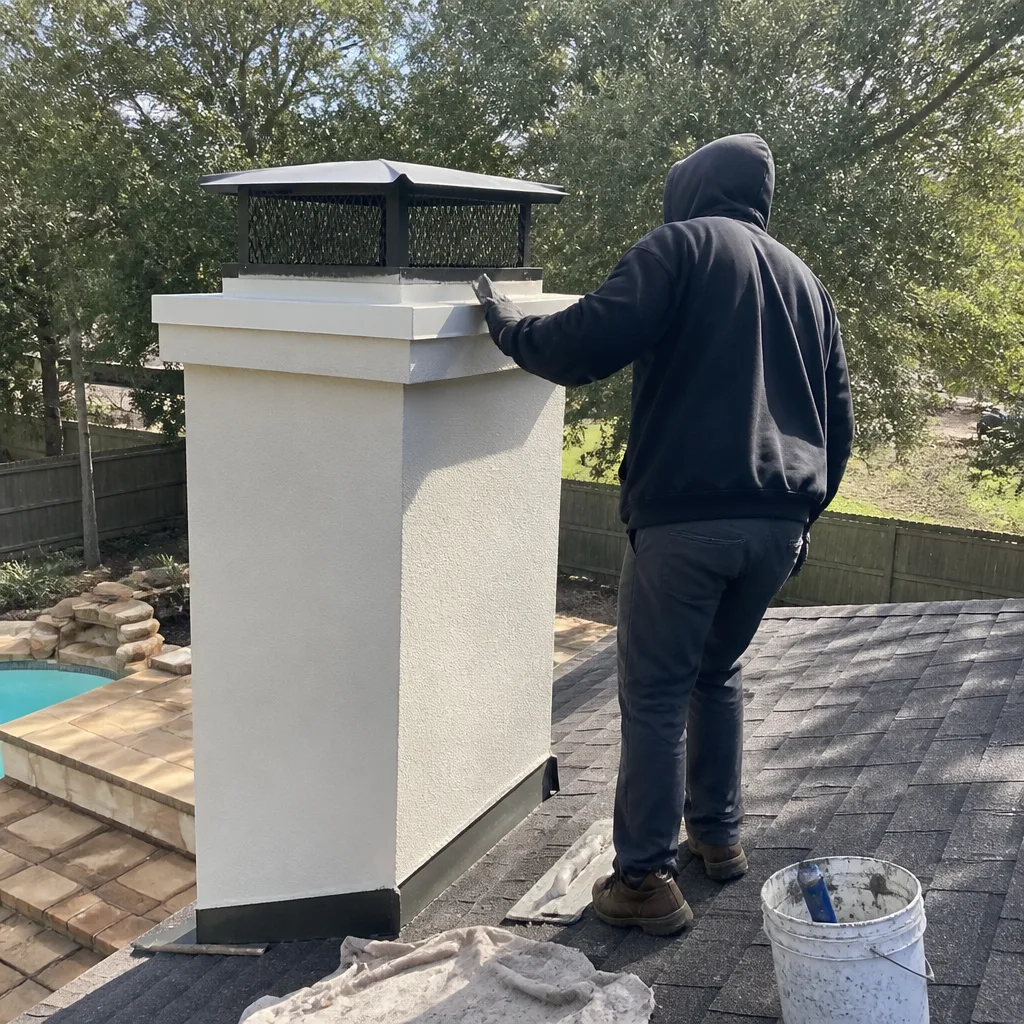 After
After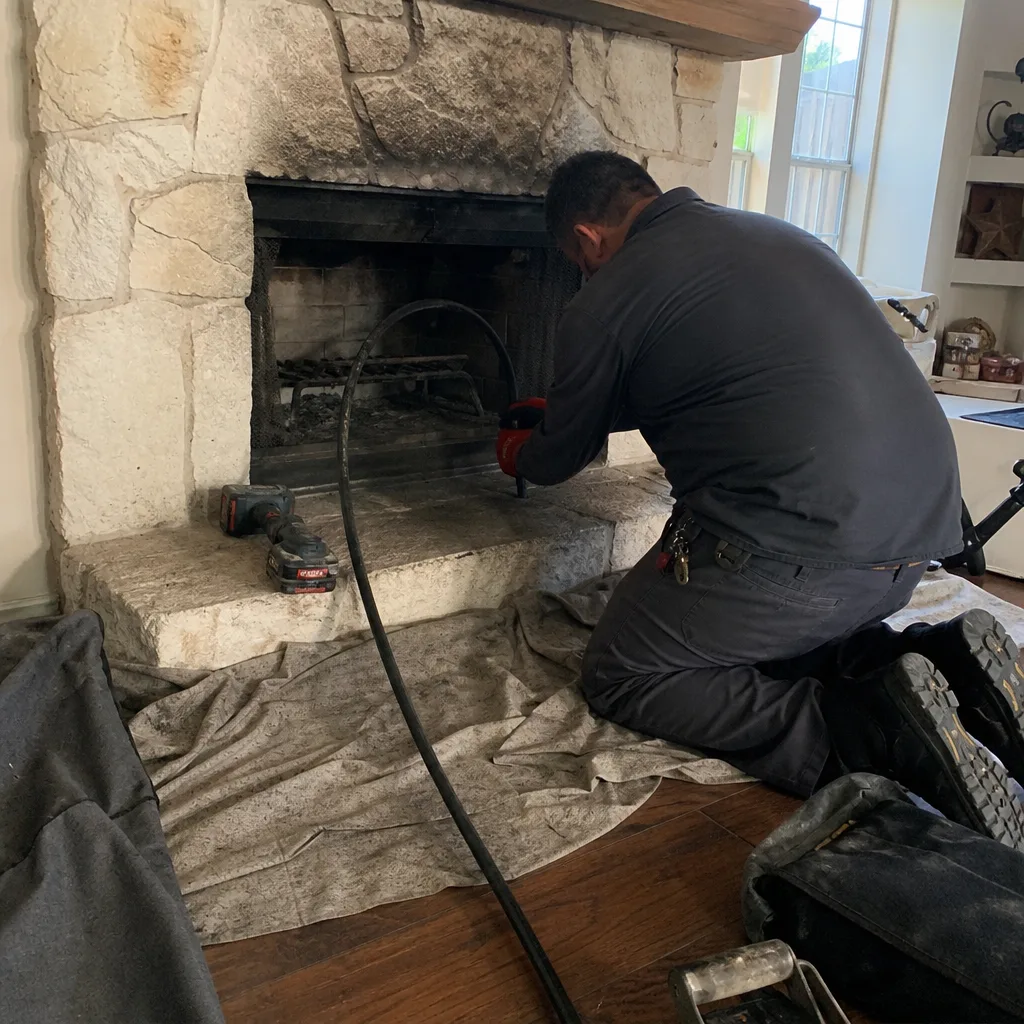 Before
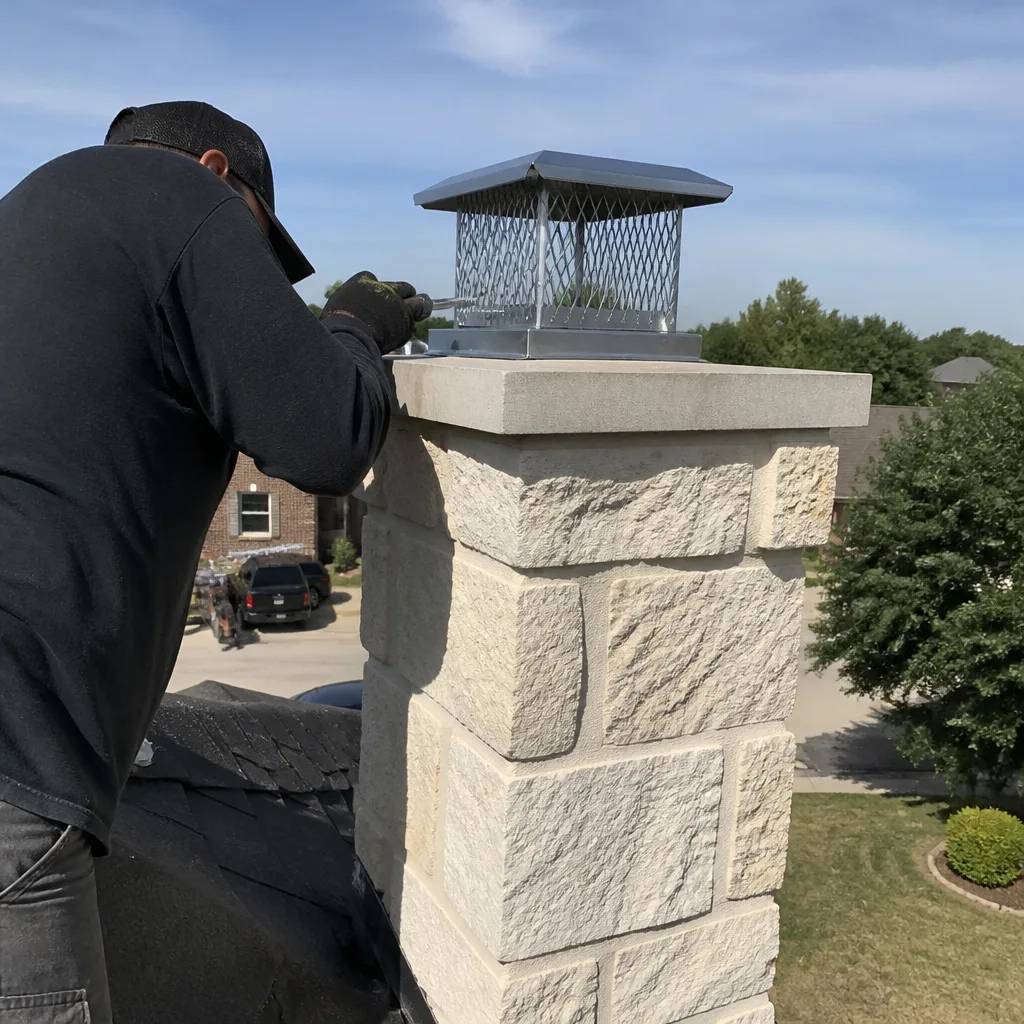 After
After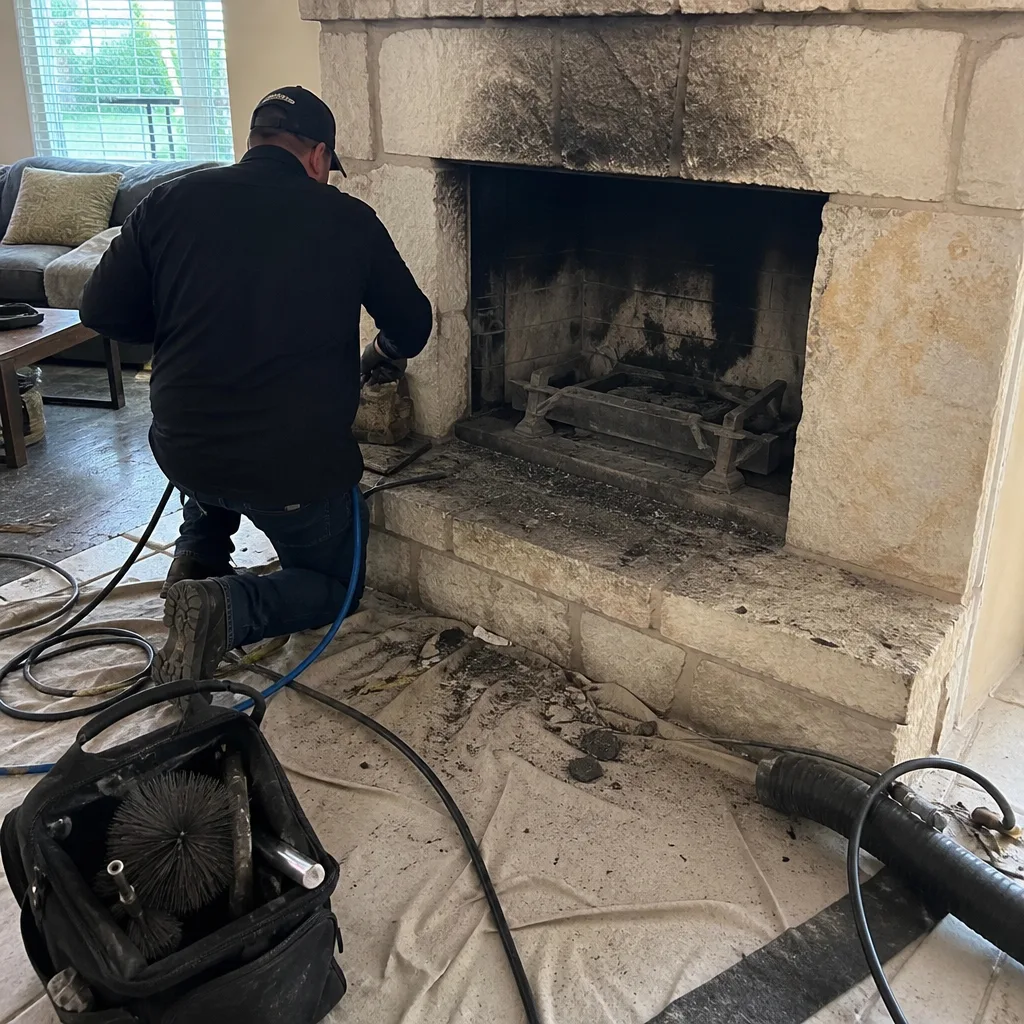 Before
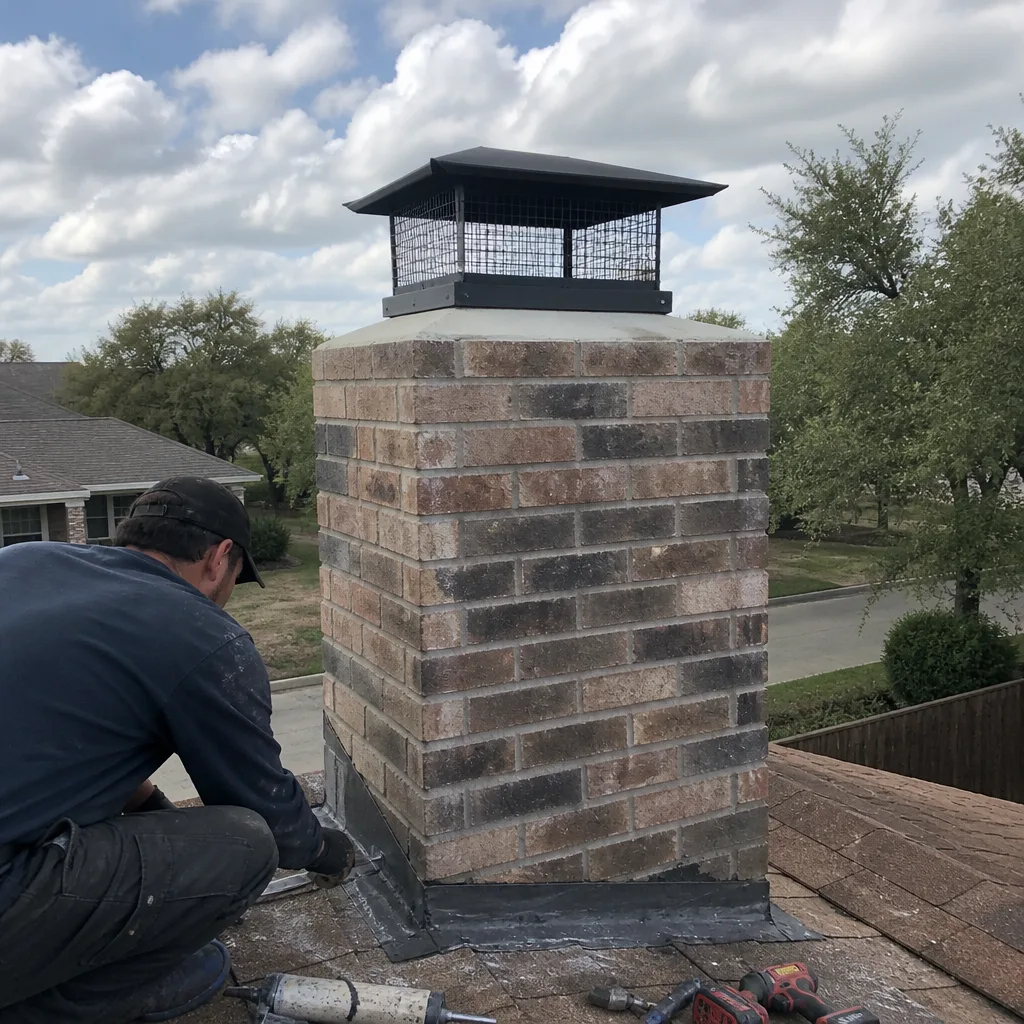 After
AfterReplacement Cost & What’s Included
A Famco flue liner replacement in San Antonio typically lands between $1,800 and $3,200 installed. The spread comes down to three things: how many feet of liner your chimney needs, what diameter your appliance calls for, and how much work is involved in pulling the old liner and preparing the flue for the new one. A single-story home with a straight 15-foot flue and a 6-inch stove liner will sit near the bottom of that range. A two-story house with an offset flue, an 8-inch fireplace liner, and a deteriorated clay tile flue that has to be broken out first will push toward the top.
Every quote we give in San Antonio includes the liner, the top plate and rain cap, the appliance connector, the labor to remove the old liner, and a camera inspection before and after so you can see the old liner’s condition and the new liner seated correctly. There’s no separate fee for the inspection, no surprise line item for roof access, and the written price you approve is the price on the invoice. The work is covered by our 365-Day Done Right Promise: if something isn’t right, we make it right, no fine print and no runaround. We also honor a minimum 15-year manufacturer warranty on the liner itself, and we’ll give you the liner’s serial number and warranty registration paperwork before we leave.
DIY or Call Us?
What you can safely do yourself: check the visible liner section at the top of the chimney with a flashlight, look for rust stains on the exterior chimney face, and note whether the stove has started burning differently. Those observations help us quote the job accurately over the phone. What we don’t recommend doing yourself is anything involving the liner removal, flue tile breakout, or roof work. A flue liner that’s failing is often brittle, and pulling it without the right tools sends debris down into the smoke shelf or, worse, leaves a partially removed liner wedged in the flue. We’ve been called to enough San Antonio homes where a well-intentioned DIY liner pull turned a $2,000 job into a $4,000 one, and we’d rather see you put that money into a liner that’s installed once, correctly.
Danny Cortes has worked chimneys across the Southwest for nearly two decades and keeps a small notebook on every job, sketching out flue conditions so you can see what he sees. When he hands you that sketch before turning a single wrench, you’ll know exactly what’s happening in your flue and why. Call (361) 491-3153 and we’ll walk you through the liner replacement, the price, and the plan before anything gets scheduled.
FAQs
A properly installed Famco 316Ti stainless steel liner in Texas typically lasts 15 to 20 years, though San Antonio’s summer humidity and the corrosive effects of creosote from occasional wood fires can shorten that to 10 to 15 years if the chimney isn’t swept every year or two. Liners in fireplaces that burn unseasoned wood with high moisture content fail faster, because acidic creosote sits against the steel instead of being swept out. Call (361) 491-3153 for a camera inspection and an honest read on how much life your liner has left.
Small pinholes can sometimes be patched if the surrounding steel is still sound, but once a Famco liner has a split seam or visible sag, patching is a temporary fix that buys months, not years. We’ll show you the camera footage and tell you plainly when a repair can safely wait and when replacement is the only responsible choice, because nothing gets recommended without evidence you can see for yourself.
Most Famco liner replacements in San Antonio take 3 to 5 hours from start to finish, including removing the old liner, prepping the flue, installing the new liner, and performing the after-install camera inspection. Two-story homes with offset flues or deteriorated clay tiles can extend that to a full day, and we’ll give you a written time estimate before the crew arrives.
We carry the common Famco diameters – 4, 5, 6, and 8-inch 316Ti liners – in our San Antonio service vehicles, along with matching top plates, rain caps, and connectors. If your chimney needs an uncommon diameter or a smooth-wall liner, we order it and typically have it in hand within two to three business days.
If the liner has a visible split, significant corrosion, or is no longer containing flue gases, waiting a year means those gases and moisture are working on your chimney masonry and possibly your home’s framing the whole time. If the liner is thin but intact, we’ll tell you that too, and we’ll write down what to watch for so you’re deciding with facts, not pressure. Call (361) 491-3153 and we’ll give you a straight answer either way.
A clean flue is the quietest safety feature in your home – let’s make sure yours is doing its job.
Written by Danny Cortes, Owner, Kindling Chimney San Antonio at Kindling Chimney San Antonio, serving San Antonio and nearby areas.