
 Masonry repair
 Sweep & inspection
 Caps & crowns
 Flue relining
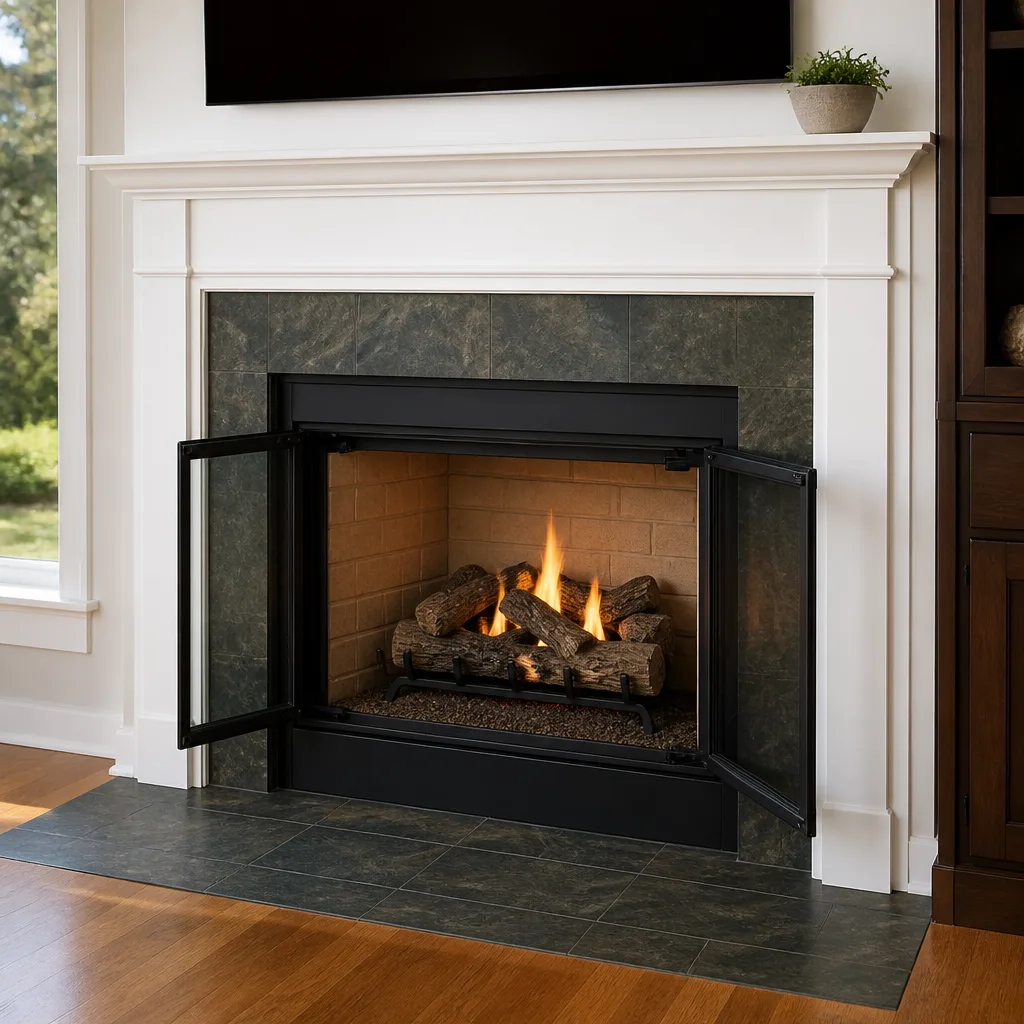 Gas fireplace service
Level 1 sweep and inspection to the NFPA 211 annual standard - flue, crown, cap, and flashing checked and photographed
Chimney sweep logs do not sweep chimneys. They loosen some creosote - which then falls where a brush and vacuum still have to collect it.
Copperfield Damper Repair: The San Antonio Owner’s Guide
If you have a Copperfield chimney damper that won’t open, won’t close, or rattles when the wind picks up, we can help. We keep Copperfield-compatible damper parts on the truck for most top-mount and throat-mount models, and most repairs run between $185 and $410 installed, depending on what actually failed. We can typically get your damper working again on the first visit, and you’ll know the exact price before we touch anything.

Most San Antonio homeowners discover their Copperfield damper has failed in one of three ways: the handle suddenly spins without resistance, the damper plate won’t stay in position, or they feel a cold draft coming down the chimney on winter nights. Occasionally it’s the cable that’s snapped inside the chimney, sometimes it’s the pivot hardware, and sometimes the cast iron plate itself has warped from years of Texas heat cycling. Whatever the failure, you want it fixed before the next cold front, because an open damper is a direct hole in your house.
Which Copperfield Models This Applies To
Copperfield makes two damper families we see regularly in San Antonio homes. The first is their traditional cast iron throat damper, which sits just above the firebox and works with a rotary handle or poker control. The second is their top-sealing damper, which mounts at the crown of the chimney and runs a cable down to a lever or handle in the firebox. Each family uses different repair parts, and the parts do not interchange.
The fastest way to identify your Copperfield damper is to look for the stamp on the damper plate itself. Most Copperfield throat dampers have a “CF” prefix stamped on the top side of the plate, while the top-seal models usually have the model number printed on the inside face of the cast aluminum housing. If you can’t read it, take a photo of the damper from the firebox and measure the width of the opening in inches. Danny Cortes keeps a small notebook on every job for exactly this reason, he’ll sketch what he sees so you can make sense of it before any work is approved. We recommend Copperfield OEM parts where they’re still available, especially for the top-seal cable assemblies, because the cable length and end fitting are model-specific. For throat damper pivots and handles, a quality aftermarket replacement often outlasts the original, and we’ll tell you honestly which one makes more sense for your chimney.
Styles & brands we work with
Signs Your Copperfield Damper Repair Is Failing
- The handle spins without stopping: On throat dampers, this almost always means the pivot pin has sheared or the keyway has wallowed out. The plate is no longer connected to the handle assembly, so the damper is stuck wherever it was when the connection failed.
- The damper won’t hold its open or closed position: On top-seal Copperfield models, this is usually the detent mechanism on the lever assembly wearing down, or the cable housing stretching. You’ll notice the handle drifts back toward the middle no matter what you do.
- You feel a cold draft even with the damper closed: A warped plate or a damaged gasket on a top-seal damper won’t seat properly. San Antonio’s temperature swings make cast iron expand and contract, and after enough years, the plate can take a set that leaves a gap.
- The damper is stuck open and won’t budge: Creosote and rust are the usual culprits. In San Antonio’s humidity, even the best cast iron develops surface rust, and that rust binds the plate against the frame. Forcing it usually breaks the handle or pivot rather than freeing the plate.
- You hear a rattling sound from the chimney on windy days: This is most common with top-mount Copperfield dampers. The linkage between the cable and the plate has worn loose, and the plate flaps against the crown. Left alone, the wind will keep working that connection until it fails completely.
See the difference
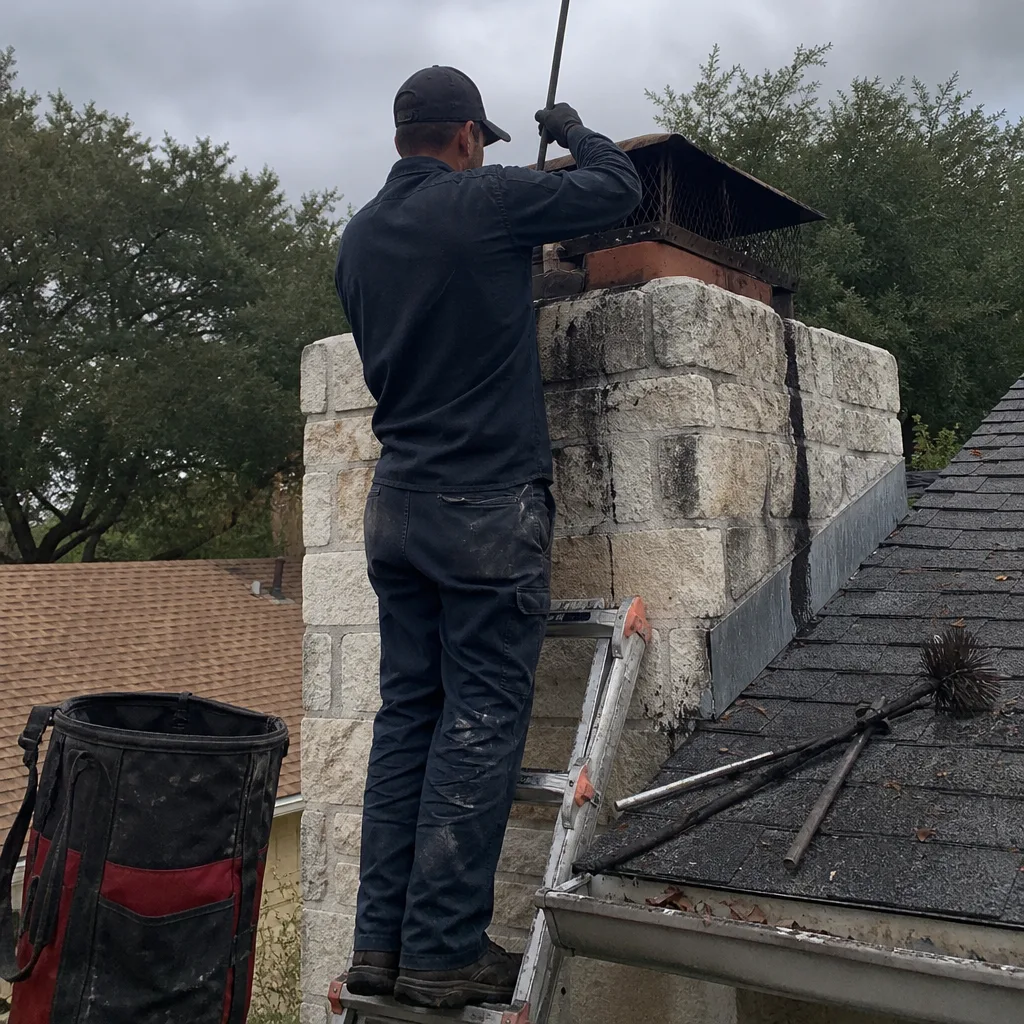 Before
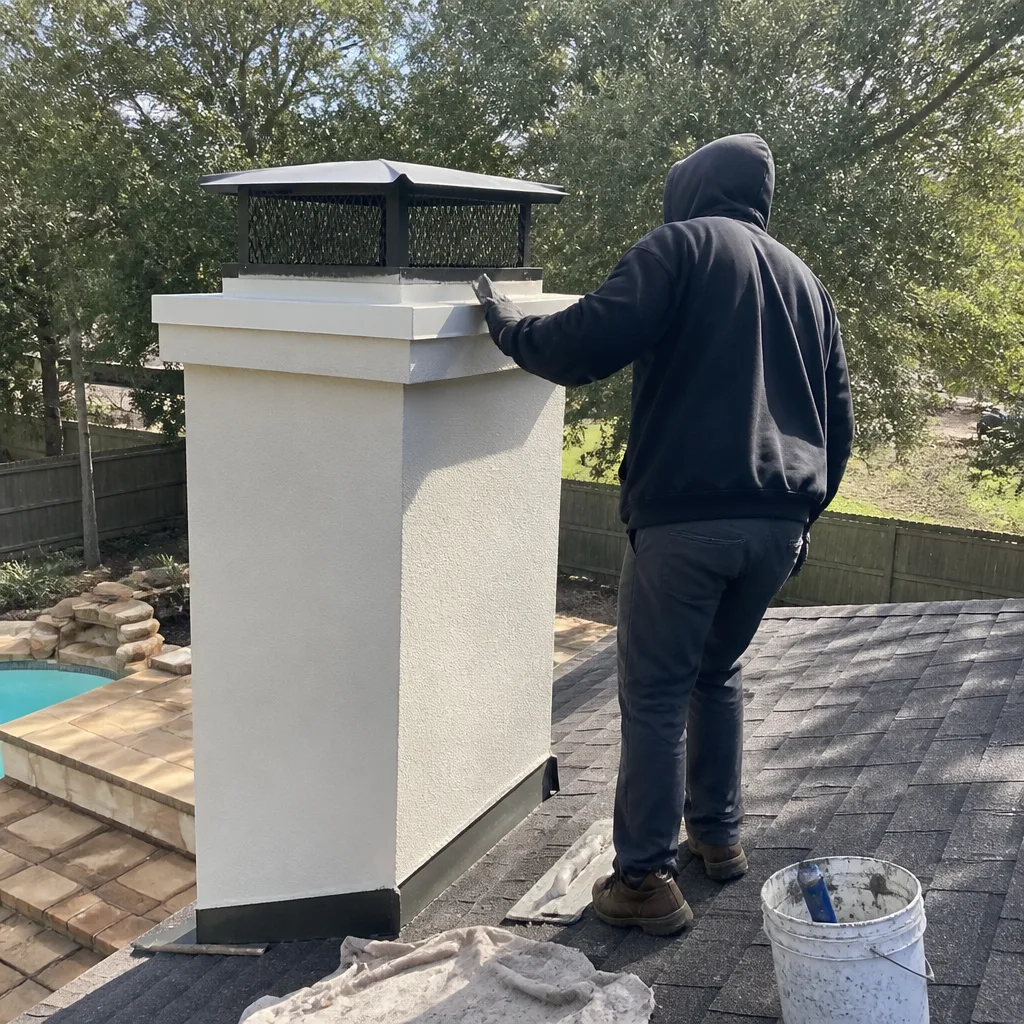 After
After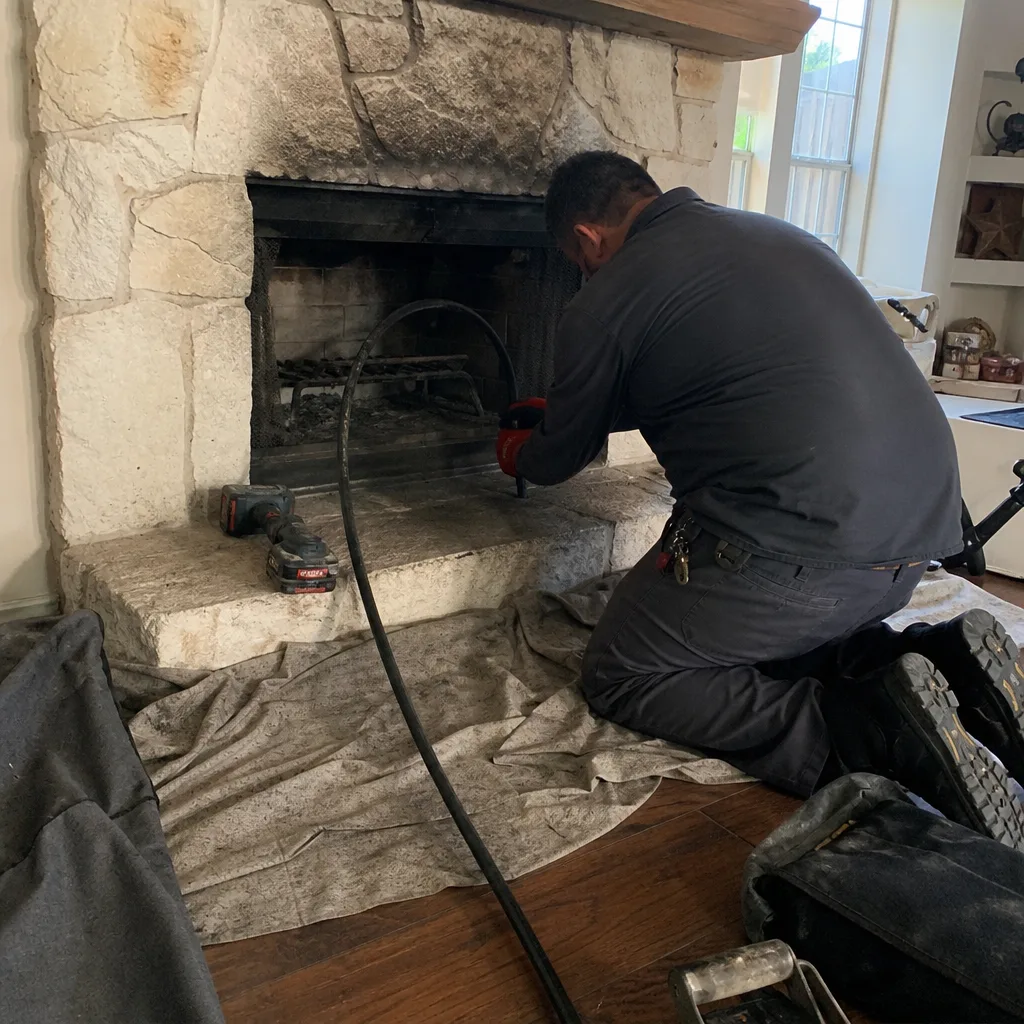 Before
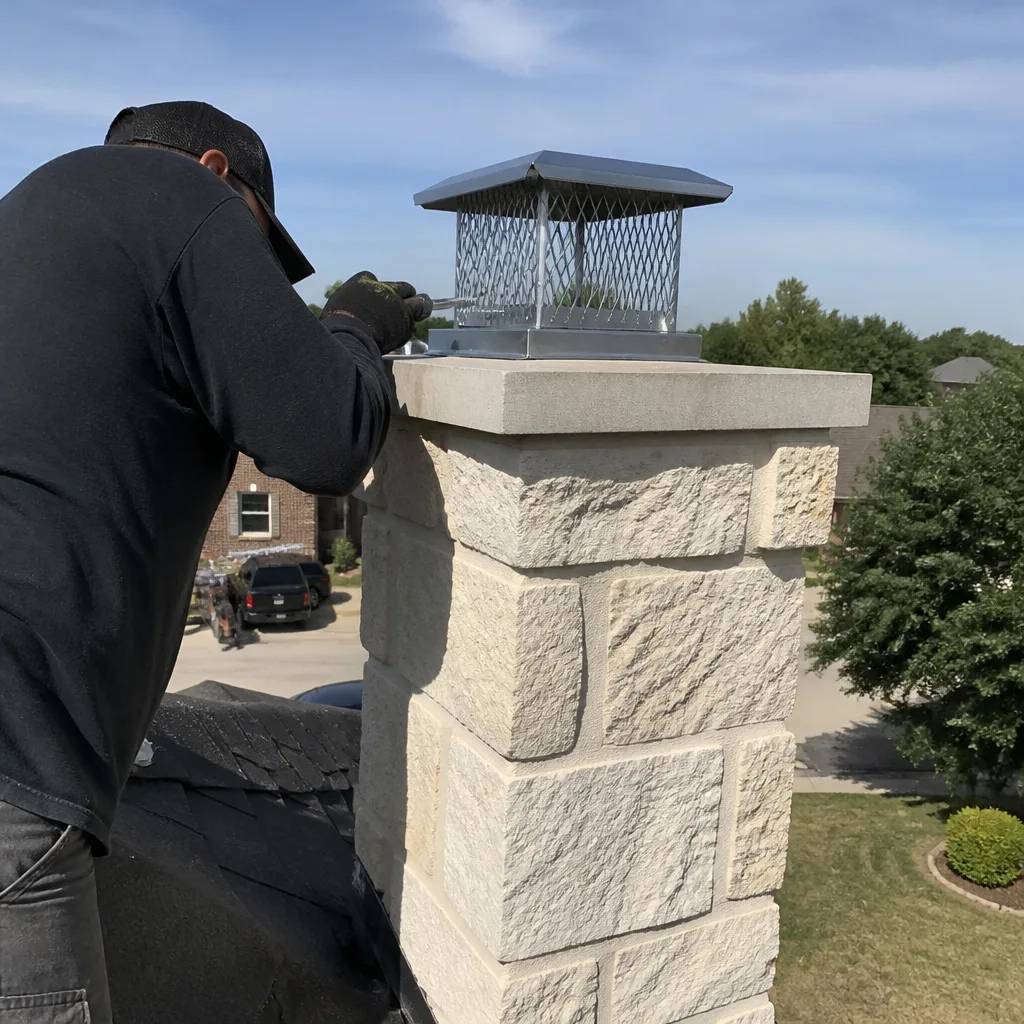 After
After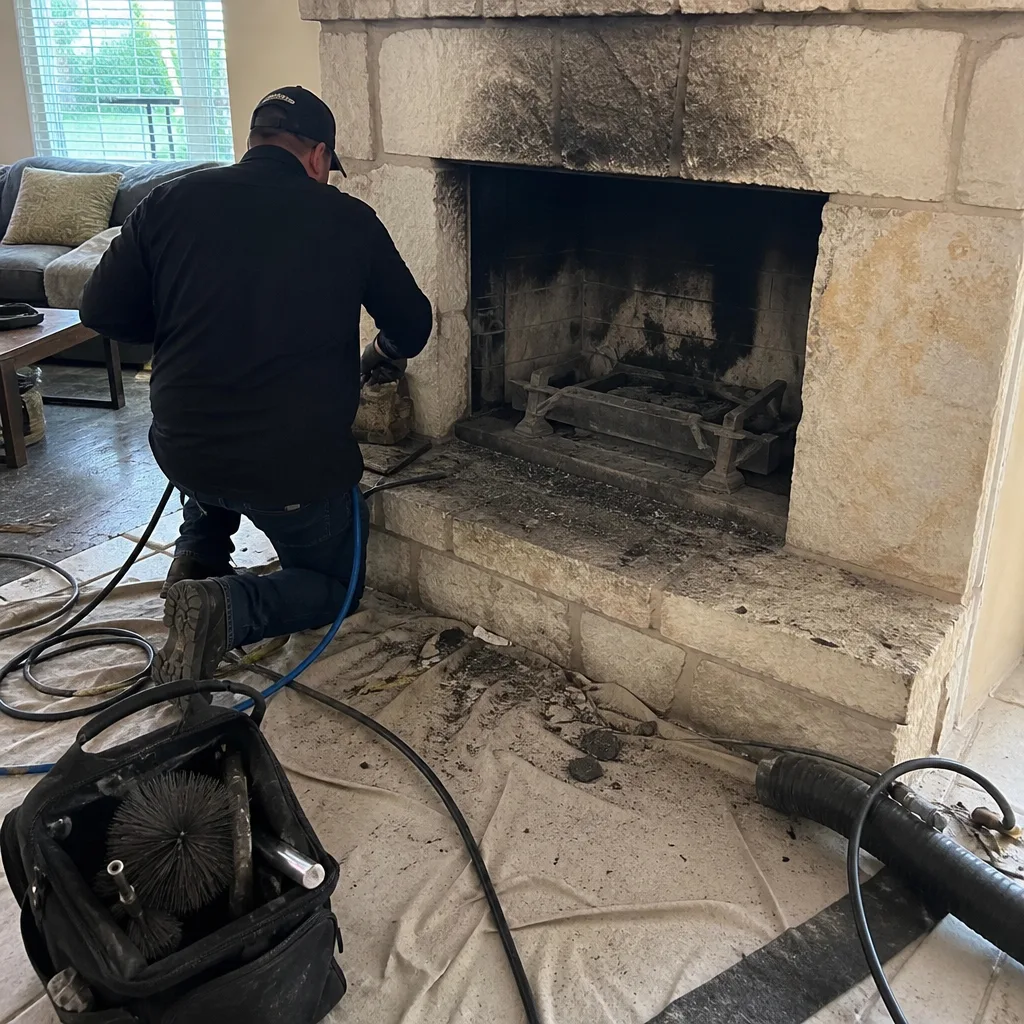 Before
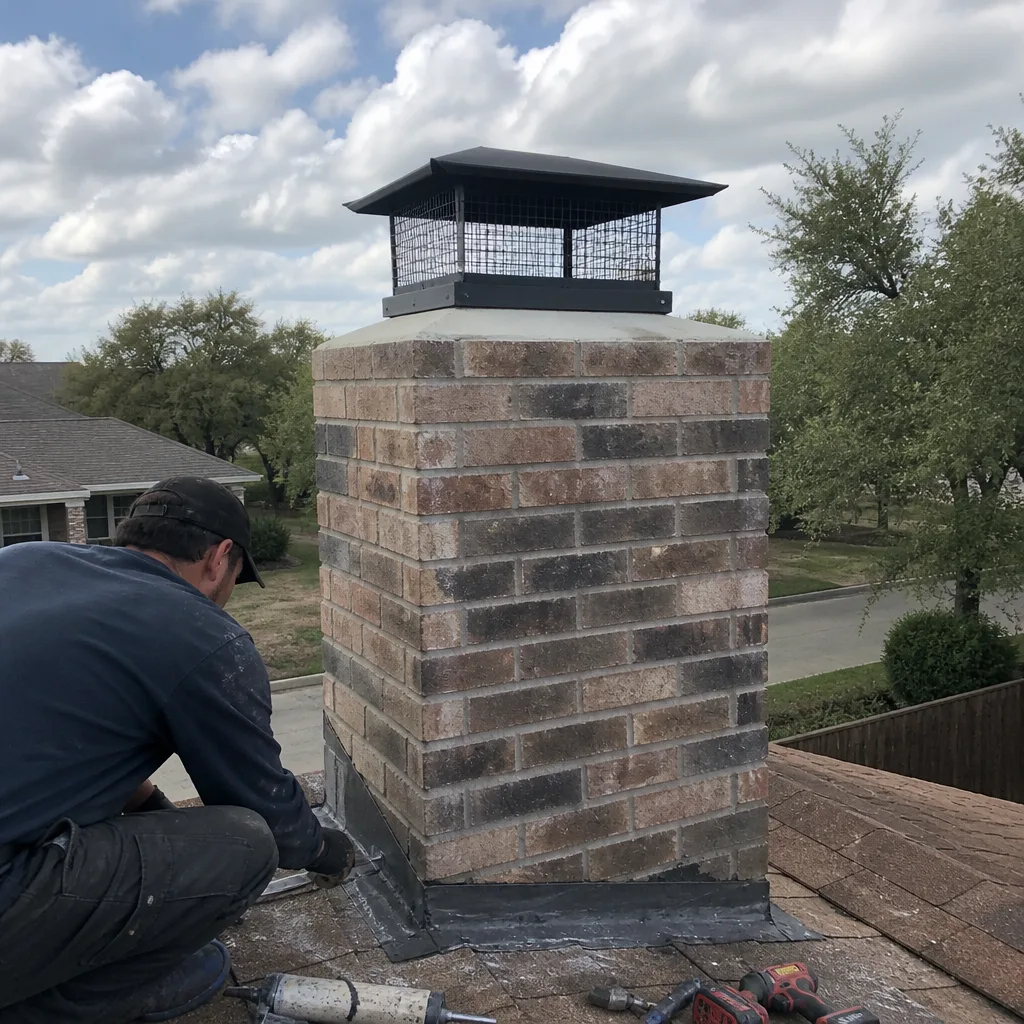 After
AfterReplacement Cost & What’s Included
For San Antonio homes, a Copperfield damper repair typically runs $185 to $410, installed. A simple pivot pin replacement on a throat damper usually sits at the low end of that range. A full cable assembly replacement on a top-seal Copperfield sits toward the high end, especially if the chimney is tall and the cable routing is tight. A complete damper replacement with new hardware lands around $390 to $410, and that includes the part.
Every quote includes the part, the labor, and the clean-up, with a written price before any work starts. The technician will show you the failed part and walk through what he found, the way Danny does on every job, sketching the flue condition in a small notebook so you can see what he sees. There’s no pressure to make a decision on the spot, but if you want it fixed that day, we usually have the part on the truck. All of our damper repair work carries our 365-Day Done Right Promise: if it isn’t right, we make it right, no fine print and no runaround.
DIY or Call Us?
You can safely check a few things yourself. With the fireplace cold, shine a flashlight up into the throat to see if the plate is visibly warped or rusted. On a top-seal model, work the handle slowly and listen for grinding or slack in the cable. That kind of inspection costs you nothing and gives us a head start on the phone.
But actually repairing a Copperfield damper means working inside a cramped flue area, often on a ladder, sometimes needing to remove the damper plate itself, and frequently dealing with decades of creosote dust that you don’t want in your living room. On top-seal models, the cable runs the full height of the chimney, and fishing a new cable without damaging the flue liner is a job for a trained technician. If the damper is rusted in place, forcing it can crack the throat or chip the firebrick, and now you’re looking at masonry work instead of a simple damper repair. Call us at (361) 491-3153 and we’ll give you a straight answer and a written price before any work begins.
FAQs
A Copperfield top-seal damper in a San Antonio chimney generally lasts 12 to 18 years, while a cast iron throat damper often lasts 20 years or more with regular use. Texas humidity is what shortens the lifespan most, since rust creep at the pivot points accelerates wear long before the plate itself fails. Call (361) 491-3153 and we’ll assess the condition of yours in one visit.
Yes, and in most cases the repair is limited to one failure point, a pivot pin, a handle assembly, a cable, or a detent, not the entire damper. The decision comes down to how the plate itself looks once we can inspect it closely. We’ll show you the part, give you the repair cost and the replacement cost side by side, and you decide what makes sense.
A typical Copperfield damper repair takes between 45 minutes and 2 hours, with top-seal cable replacements on the longer end. We provide a written price before any work starts, and we’ll tell you the expected time when you book so you can plan around it.
Yes. We stock the most common Copperfield throat damper pivots, handles, and top-seal cable assemblies in our San Antonio service trucks, and we source direct from Copperfield and selected aftermarket suppliers for the less common model-specific parts. If yours needs a part we don’t have, we’ll give you a clear timeline on ordering before you approve anything.
Written by Danny Cortes, Owner, Kindling Chimney San Antonio at Kindling Chimney San Antonio, serving San Antonio and nearby areas.